TL;DR
The main benefit of roof tarping is that it stops the water now. After storm damage, a properly installed tarp keeps rain out while you arrange the real repair, preventing the interior, insulation, and mold damage a single open night can cause. It also buys time to schedule repairs and supports your insurance claim by showing you took reasonable steps to limit damage. Tarping is temporary, not permanent, and because storm-damaged roofs are dangerous, a professional tarp is usually the safer call.
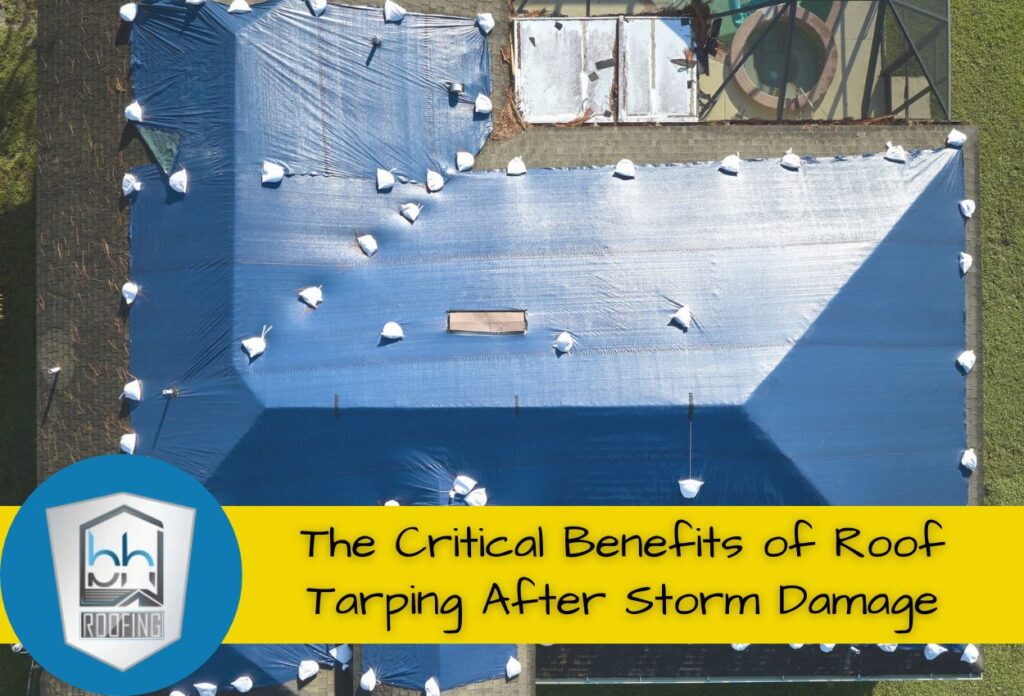
The main benefit of roof tarping is simple: it stops the water now. After storm damage opens up a roof, a properly installed tarp keeps rain out of your home while you arrange the real repair, which prevents the interior, insulation, and mold damage that a single open night can cause. It’s a temporary fix, but it’s the one that protects everything under the roof until a permanent repair happens.
Here’s what tarping actually does for you, when you need it, why it’s temporary, and whether it’s a job to hand off.
What are the benefits of roof tarping?
Tarping buys you protection and time. It stops active leaks, prevents further water damage to the structure and belongings, and holds the line while you schedule repairs and start an insurance claim. For a small cost, it prevents the far larger bill that comes from letting a damaged roof sit open through the next rain.
| Benefit | Why it matters |
|---|---|
| Stops active leaks | Keeps rain out of the home right away |
| Prevents further damage | Protects decking, insulation, ceilings, and belongings |
| Buys time for repairs | Lets you schedule the permanent fix, not scramble |
| Supports your insurance claim | Shows you took reasonable steps to limit damage |
| Low cost vs. the damage | A cheap stopgap against a far larger repair bill |
That fourth row matters more than people expect. Most policies expect you to take reasonable steps to prevent further damage, and a tarp is exactly that, a point the Texas Department of Insurance makes in its storm recovery tips. Our emergency roof tarping is often the first thing we do on a storm call.
When do you need roof tarping?
Whenever the roof is compromised and rain is a risk: after hail or wind tears off shingles, a tree limb punctures the deck, or any storm leaves an opening water can get through. If you can see damage or you already have an active leak, a tarp should go on before the next rain, not after you’ve lined up the full repair.
Speed is the whole point, because water damage compounds fast and mold can start within a day or two. That’s why we respond to storm calls within 24 hours to get a home dried-in. For what to do in those first hours, our guide on the first 24 hours after roof damage walks through the steps, and our storm damage team handles the stabilization.
Is roof tarping a permanent fix?
No, and treating it like one is the mistake. A tarp is a temporary shield that buys days or a few weeks, not months. UV, wind, and pooling water break tarps down over time, so a tarp left too long eventually leaks itself. It protects the home only until the actual repair or replacement happens.
So the tarp is step one, not the solution. Use the time it buys to get an inspection, document the damage for insurance, and schedule the permanent fix. A reputable contractor tarps to protect you and then follows through with the real repair, rather than leaving a tarp flapping for months.
Should you tarp a roof yourself or call a pro?
A small, reachable area on a low roof can sometimes be tarped by a careful homeowner, but storm-damaged roofs are slippery, unstable, and dangerous, and a poorly anchored tarp can blow off or channel water the wrong way. After a storm, the roof you’d be climbing is exactly the one most likely to give way. The Better Business Bureau also warns to be careful hiring after a storm, when out-of-town crews chase the damage.
A professional tarp is anchored and sloped to actually shed water and stay put through the next storm, and the crew has the safety equipment for a damaged roof. Given the height and the stakes, most homeowners are better off calling. It also gets a trained eye on the damage right away, which speeds the real repair and the claim.
The bottom line on roof tarping
Roof tarping stops the water, prevents further damage, buys time for the real repair, and supports your insurance claim, all for a small cost against a large risk. It’s temporary, so it’s step one after storm damage, not the finish line. And because storm-damaged roofs are dangerous, a professional tarp is usually the safer, more reliable call.
If a storm has opened up your roof, the clock is on. Call for emergency tarping and we’ll get your home dried-in within 24 hours, then document the damage and lay out the permanent repair. Don’t let a damaged roof sit open through another rain.
Schedule Emergency Service or call (210) 267-9029.