Top Roofing Materials That Keep Apartment Buildings Protected and Profitable
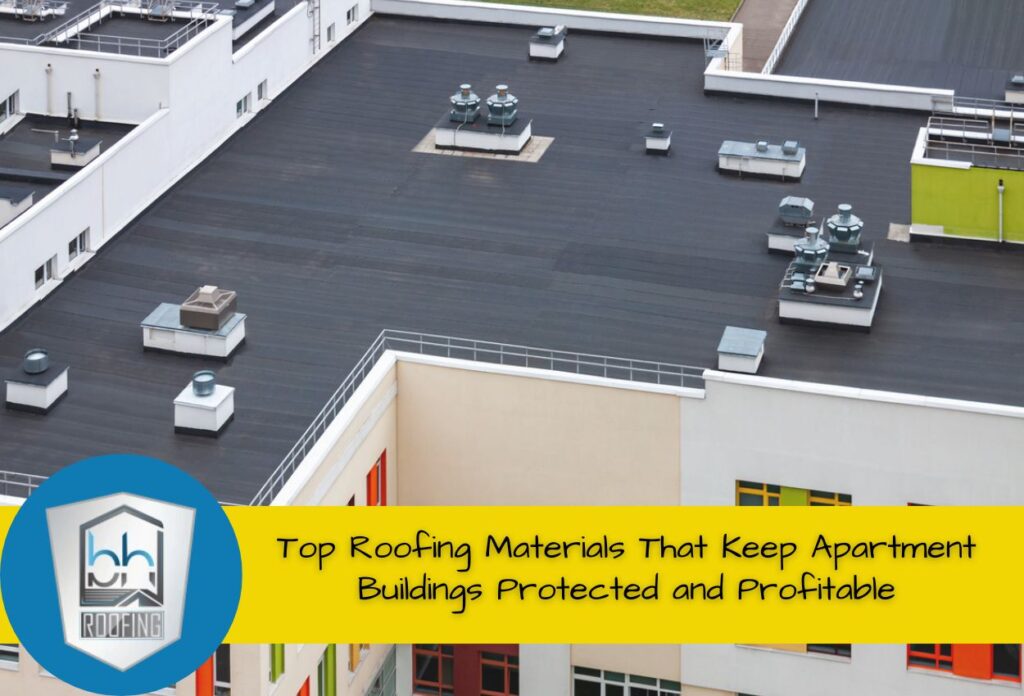
For most apartment buildings in San Antonio, the best roofing material is a reflective single-ply membrane, and TPO is the usual winner. Its white surface bounces back the Texas sun and can cut cooling costs 10 to 15 percent, the heat-welded seams resist leaks, and it covers big flat roofs fast. PVC is the better pick if the building has restaurant or kitchen exhaust, while modified bitumen and built-up roofs handle heavy rooftop foot traffic, and standing seam metal lasts 50-plus years when the budget allows. EPDM rubber is the budget option, but its black surface absorbs heat, which works against you in our climate. At BH Roofing we install TPO, PVC, and modified bitumen on multi-family roofs across San Antonio, and the inspection is free.
If you own or manage an apartment building in San Antonio, the roof is one of the biggest line items you’ll ever sign off on, and the wrong material turns into leak calls, angry tenants, and a cooling bill that climbs every summer. The good news is the decision isn’t really a mystery. For most flat and low-slope apartment roofs here, a reflective single-ply membrane is the answer, and TPO is the one that wins most often.
That doesn’t mean TPO is right for every building. A property with a rooftop restaurant has different needs than a garden-style complex with a dozen HVAC units up top. So below is the short answer, a side-by-side of every option, and the honest case for when each one is the right call in our heat.
What is the best roofing material for an apartment building in San Antonio?
For the typical flat or low-slope apartment roof here, TPO is the best all-around choice. It’s a white single-ply membrane that reflects the sun instead of soaking it up, the seams are heat-welded into one continuous sheet, and it covers a big roof quickly and affordably. In a city where the AC runs eight months a year, a reflective roof pays you back every cooling season.
But the “best” material depends on the building. Here’s how the main options stack up.
| Material | Typical lifespan | Installed cost (per sq ft) | Reflective? | Best for |
|---|---|---|---|---|
| TPO (single-ply) | 20 to 30 yrs | $5 to $10 | Yes, white | Most San Antonio apartments, energy savings |
| PVC (single-ply) | 20 to 30 yrs | $6 to $12 | Yes, white | Buildings with kitchen or grease exhaust |
| Modified bitumen | 15 to 20 yrs | $4 to $10 | No, dark | High foot-traffic roofs |
| Built-up (BUR) | 20 to 30 yrs | $5 to $9 | Gravel surface | Heavy rooftop traffic, proven track record |
| Standing seam metal | 50+ yrs | $10 to $16 | Yes | Long-term value, lowest maintenance |
| EPDM rubber | 20 to 30 yrs | $5 to $12 | No, black | The tightest budgets |
Read that reflective column closely, because in San Antonio it matters as much as price. A white roof and a black roof can sit on identical buildings and run very different cooling bills.
Why is TPO the go-to for most apartment roofs?
TPO checks the boxes that matter most for a multi-family property. The white surface reflects solar heat instead of pulling it into the top-floor units, and that reflectivity can trim cooling costs by 10 to 15 percent compared with a dark roof. On a building full of tenants who each control a thermostat, that adds up fast.
The seams are the other big reason. Instead of glue or tape, TPO seams are hot-air welded into a bond that’s stronger than the membrane itself, so the most common leak point on a flat roof basically goes away. The sheets come wide, which means fewer seams and faster installs over the large footprints apartment buildings have. Add in solid puncture resistance and low maintenance, and you can see why it’s the default we recommend for most San Antonio complexes.
When is PVC the better choice than TPO?
PVC is the move when the building puts grease or chemicals on the roof. If there’s a restaurant, a commercial kitchen, or heavy exhaust venting onto the roof surface, PVC holds up where other membranes break down, because it’s built to resist the oils and chemicals that would degrade TPO or EPDM over time.
It shares TPO’s best traits otherwise. PVC is a white, reflective, heat-welded single-ply, so you keep the energy savings and the strong seams. It runs a bit more per square foot, but for a mixed-use building with food service downstairs, it’s cheaper than re-roofing early because the grease ate your membrane. For a plain residential complex with no kitchen exhaust, TPO usually gives you the same benefits for less.
What about modified bitumen and built-up roofs?
These are the heavy-duty options, and foot traffic is where they shine. If your roof is busy, lots of HVAC units, maintenance crews up there constantly, satellite and cabling work, a thicker multi-layer system takes the abuse better than a single-ply membrane.
Modified bitumen is asphalt reinforced with polymers so it flexes with temperature swings instead of cracking, and it stands up well to hail and hard rain. Built-up roofing, the classic gravel-topped system, layers multiple plies for redundancy, so one small problem doesn’t mean a leak. Both are proven and tough. The tradeoff in San Antonio is color: both are dark and absorb heat, so you give back some of the cooling savings a reflective roof would hand you. A reflective coating can help close that gap.
Is a metal roof worth it for an apartment building?
If you plan to hold the property for the long haul, often yes. A standing seam metal roof lasts 50 years or more with very little maintenance, reflects heat, and resists rot, insects, and the usual flat-roof headaches. It’s also one of the few options that works on both low-slope and steeper sections, which helps on buildings with mixed rooflines.
The catch is the upfront cost. Metal runs the highest of any option per square foot, so it only pencils out when you’re looking at lifecycle cost, not just this year’s budget. Spread that 50-year lifespan against two or three single-ply replacements over the same period and metal can be the cheaper roof in the end. For a property owner planning to sell in five years, it’s usually overkill. For a long-term hold, it can be the smartest money on this list.
Is EPDM rubber a good budget option?
EPDM earns its place as the budget pick. It’s a flexible rubber single-ply that’s affordable, quick to install, and genuinely good at absorbing hail without cracking, which counts for something in our hail season. If the priority is a watertight roof at the lowest reasonable cost, it does the job.
The honest knock on it here is color. Standard EPDM is black, and a black roof in San Antonio soaks up heat and pushes your cooling costs the wrong direction. You can get white EPDM, but that erases part of the price advantage that made you look at EPDM in the first place. For a tight budget it’s a sensible middle ground. For energy performance in this climate, a reflective TPO is usually the better long-term value.
How do you choose the right roofing material for your property?
Five things decide it, and a good contractor will walk you through all of them. Start with the roof slope and how much foot traffic it sees, since that points you toward single-ply versus a heavier multi-layer system. Then weigh the climate, which in San Antonio pushes hard toward reflective white surfaces.
After that it’s about money over time, not just today. The cheapest roof to install is rarely the cheapest roof to own once you factor in lifespan, energy, and repairs across 20 or 30 years. The building’s age and structure matter too, because an older frame may not carry a heavier system. The cleanest way to sort it out is a real inspection with a contractor who works on multi-family roofs and can show you the total cost of ownership, not just a per-square-foot number. A scheduled maintenance program then stretches whatever system you pick years past its rated life.
Get an apartment roof assessment from BH Roofing
The right roof keeps your tenants comfortable, your repair calls rare, and your cooling bills in check, and the wrong one does the opposite for decades. It’s worth getting the choice right the first time.
BH Roofing installs and services TPO, PVC, modified bitumen, and other commercial systems on apartment and multi-family properties across San Antonio. Our team inspects the existing roof and deck, walks you through the options for your specific building, and gives you a written assessment with real numbers instead of a one-size pitch.
Call BH Roofing at (210) 267-9029 to schedule a free apartment roof assessment. We’ll help you pick the system that protects the property and the bottom line.