TL;DR
Yes, you can almost always replace gutters without replacing the roof, because gutters attach to the fascia board, not the roofing material. Replace them on their own when the roof is sound; fix any soft fascia first. Plan gutters and roof together mainly when the roof is near its end or when tile or metal edge details connect the two. Gutter replacement runs about $4 to $40 per linear foot installed.
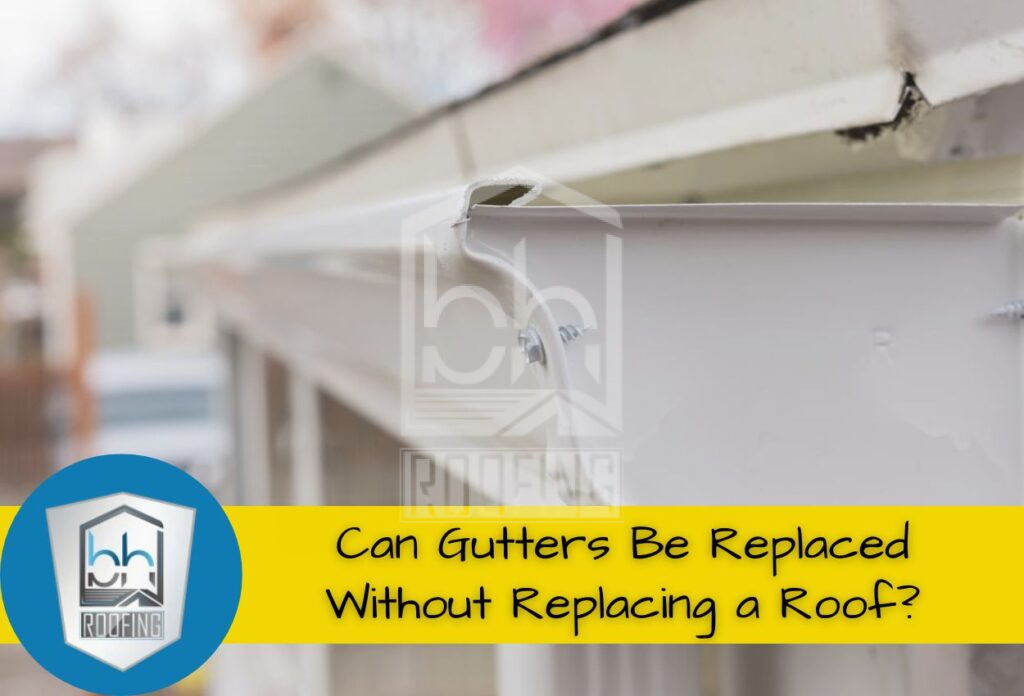
Yes, in most cases you can replace gutters without touching the roof. Gutters attach to the fascia board along the roof edge, not to the shingles or the roof surface, so a crew can remove the old gutters and hang new ones while the roof stays exactly as it is. The main exceptions are tile and some metal roofs, and cases where the fascia or drip edge is damaged.
So a failing gutter almost never means a new roof. Below is when gutters and roof can be handled separately, when they’re better done together, and what gutter replacement runs.
Can gutters be replaced without replacing the roof?
Almost always, yes. Because gutters fasten to the fascia rather than the roofing material, replacing them is its own job with its own price, usually a few hundred to a few thousand dollars rather than the tens of thousands a roof costs. If your shingles are fine but the gutters are sagging, rusted, or leaking, you replace the gutters and leave the roof alone.
| Situation | Replace gutters alone? | Why |
|---|---|---|
| Shingle roof in good shape, worn gutters | Yes | Gutters attach to fascia, independent of shingles |
| Tile or some metal roofs | Often together | Edge details tie the gutter and roof together |
| Damaged fascia or drip edge behind the gutters | Fix first | New gutters need sound wood and flashing to hang on |
| Roof also near end of life | Consider together | One mobilization, aligned warranties, less disruption |
The one thing to check before quoting gutters alone is the wood behind them. If water has been overflowing for a while, the fascia may be soft, and new gutters need something solid to anchor to.
When should gutters and the roof be replaced together?
When the roof is already near replacement, or when the roof edge details connect the two. Tile and certain metal systems finish at the eave in a way that makes coordinating the gutter and roof cleaner. And if your roof has only a few years left, doing both at once saves a second mobilization and lets the crew set the drip edge and gutters to work together.
On area homes, we’ve found the deciding factor is usually the fascia and drip edge, not the gutters themselves. If the tear-off will expose or replace that edge anyway, hanging new gutters at the same time is the tidier sequence. Our roof inspection checks the fascia and edge so you know which path fits.
What are the signs you need new gutters?
Look for sagging or pulling away from the house, rust or orange flecks, cracks and splits, peeling exterior paint or water marks below the gutter line, and pooling water near the foundation after rain. Any one of these means the gutters aren’t moving water anymore, and in our clay soils that water goes straight to the foundation.
Most gutters last 20 to 30 years, though the material matters: vinyl runs 10 to 20 years, aluminum and galvanized steel 20 to 30, and copper 50 or more. If yours are separating at the seams or dumping water at the corners, repair may still buy time, but repeated fixes usually point to replacement. A useful rule Angi cites on gutter replacement is that once repairs top about half the cost of new gutters, replacement is the better spend. Our gutter maintenance guide covers what’s worth repairing versus replacing.
How much does gutter replacement cost?
Gutter replacement typically runs about $4 to $40 per linear foot installed, so a small, simple home might land a few hundred dollars while a large, multi-level home with custom or copper gutters can reach several thousand. Seamless aluminum, the local default, sits in the middle and balances cost against fewer leak points.
The spread comes from material, length, number of stories, and downspout count. For local seamless pricing, our seamless gutter installation cost guide breaks down the per-foot numbers, and NerdWallet’s gutter cost guide gives a national baseline to compare against.
Should you time gutter replacement with a new roof anyway?
Sometimes it’s worth it even when you don’t have to. If your roof is within a few years of replacement, doing both together means one crew, one setup, and a drip edge and gutter system designed to work as a unit. It can also align warranties and spare you a second round of ladders and disruption.
But there’s no rule that says you must. A perfectly good roof with tired gutters is a gutter job, full stop. We’ll tell you honestly whether waiting on the roof makes sense or whether combining them saves you money, based on what the roof edge actually needs. The gutter services we install can be scheduled on their own or with roof work.
The bottom line on replacing gutters
You can almost always replace gutters without replacing the roof, because the two are separate systems joined at the fascia. Replace gutters on their own when the roof is sound, fix any soft fascia first, and only plan them together when the roof is near its end or the edge details call for it.
The quickest way to know is a look at the roof edge and fascia behind the gutters. Book a free 27-point inspection and we’ll tell you whether it’s a gutter job, a fascia repair, or worth pairing with future roof work, with photos and a written report.
Schedule Your Free Inspection or call (210) 267-9029.