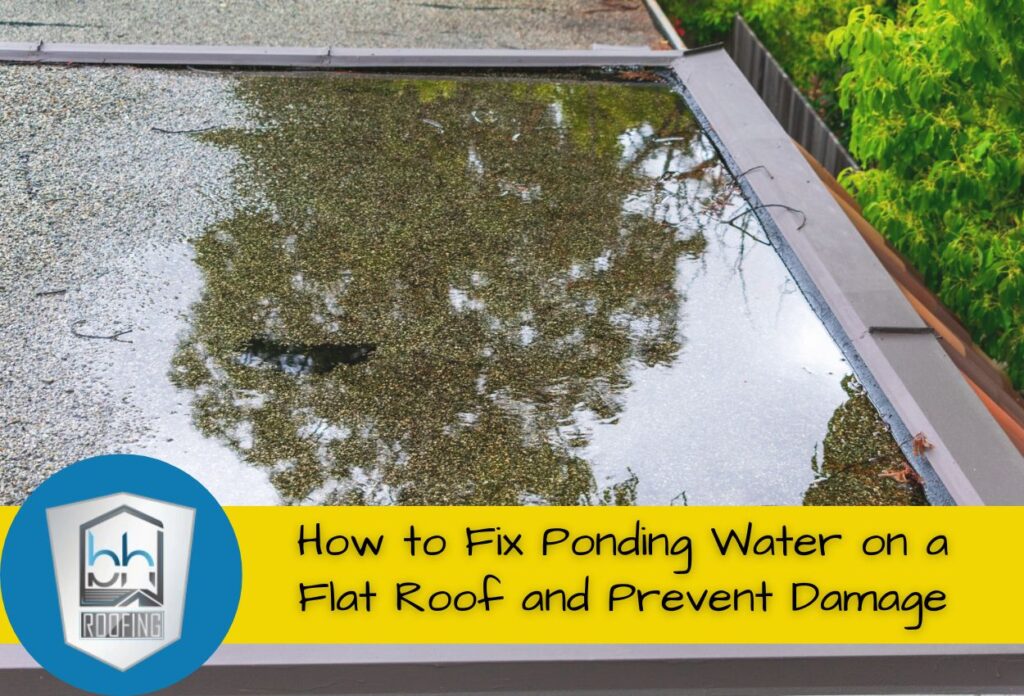
Ponding water on a flat roof creates serious concerns for property owners in the area, especially when they start noticing flat roof ponding in San Antonio issues that leave persistent pools sitting for days after rainfall. Unlike pitched roofs that naturally shed water through gravity, flat roofs rely on proper drainage systems and slight slopes to move water toward drains, scuppers, or roof edges. When any part of that system fails or becomes restricted, water begins to collect in low spots across the roof surface.
Flat roof drainage issues develop through various factors, including inadequate slope during installation, settled or sagging roof decking, clogged drains, or membrane irregularities that create depressions. The standard definition of ponding occurs when water remains on a roof surface for more than 48 hours after precipitation stops. This timeframe indicates that natural evaporation cannot keep pace with the water retention problem.
Property owners often discover ponding water damage through visible ceiling stains, unexplained moisture inside buildings, or routine roof inspections revealing standing water. These warning signs signal potential roof membrane deterioration, which accelerates when water continuously sits on roofing materials. The constant moisture exposure weakens membrane bonds, creates opportunities for punctures, and increases the likelihood of expensive structural damage extending beyond the roof system itself.
The Hidden Dangers of Standing Water on Commercial and Residential Flat Roofs
Standing water transforms flat roofing materials from protective barriers into vulnerable surfaces susceptible to quick deterioration. Ponding water on a flat roof creates a destructive cycle where constant moisture exposure breaks down membrane compounds and adhesive bonds that hold roofing systems together. The water acts as a magnifying glass, intensifying UV rays that get into and weaken protective coatings designed to shield underlying materials from weather damage.
Roof membrane deterioration begins at the surface level but quickly progresses deeper into roofing systems when ponding water damage remains unaddressed. The standing water creates temperature fluctuations that cause expansion and contraction cycles, leading to membrane cracking and separation. These small openings allow water penetration into insulation layers and eventually reach the roof deck structure.
Structural damage is one of the most serious consequences of prolonged flat roof drainage issues. Water infiltration causes wooden decking to rot, metal components to corrode, and concrete surfaces to deteriorate through freeze-thaw cycles. The added weight of retained water places additional stress on roof structures, particularly during heavy rainfall when drainage systems cannot handle the increased volume. This progression from surface ponding to structural compromise creates safety hazards and expensive repair requirements that go beyond simple flat roof slope correction measures.
Common Causes Behind Poor Drainage on Flat Roofing Systems
Structural deficiencies represent the primary source of flat roof drainage issues, beginning with inadequate initial slope design during construction. Building codes require minimum slopes of ¼ inch per foot for proper water flow, but many older structures lack the needed pitch to prevent ponding water on a flat roof. Poor installation practices, cost-cutting measures, or design oversights create flat areas where gravity cannot effectively move water toward drainage outlets.
Foundation settling and roof deck sagging compound these structural problems over time. As buildings age, natural settling creates low spots that trap water in areas originally designed with proper drainage slopes. Heavy equipment installation and foot traffic can also cause deck depressions, transforming previously functional drainage areas into water collection zones that retain water when it should be exiting through the drain system.
Maintenance-related blockages frequently exacerbate existing drainage problems through debris accumulation in gutters, downspouts, and roof drains. Leaves, branches, roofing granules, and other materials create barriers that prevent water from reaching designated drainage points. Damaged drain components, including cracked drain bowls, separated joints, or improperly installed drainage hardware, redirect water flow away from intended paths. These maintenance issues often develop gradually, allowing ponding water damage to occur before property owners recognize the underlying drainage system failures requiring immediate flat roof slope correction or component replacement.
Professional Solutions for Correcting Flat Roof Slope Problems
Tapered insulation systems provide effective solutions for eliminating ponding water on a flat roof without requiring extensive structural modifications or complete roof replacement. These engineered systems use specially designed insulation panels with varying thicknesses that create precise drainage paths directing water toward existing drains and scuppers. Professional flat roof contractors install these tapered systems during roof replacement projects or major renovations, building proper slopes into areas where structural decking cannot provide adequate pitch.
The tapered insulation approach addresses flat roof drainage issues by establishing consistent water flow patterns across the entire roof surface. Contractors design custom slope configurations based on detailed roof surveys that identify existing drainage problems and determine the best direction for water flow. This method proves particularly valuable for buildings where adding structural slope would compromise ceiling heights or create interior space limitations.
Structural slope correction methods become necessary when roof membrane deterioration has progressed beyond surface-level repairs or when existing decking has sustained significant damage from commercial roof water retention. These solutions involve modifying the roof deck structure through additional framing, deck overlay systems, or strategic reinforcement that creates proper drainage slopes. Complete roof reconstruction is the most drastic option for severely compromised structures where ponding water damage has affected multiple building components. Professional roofing contractors evaluate each situation to determine whether targeted repairs, systematic slope correction, or full reconstruction provides the most effective long-term solution for eliminating drainage problems.
Drainage System Upgrades That Prevent Future Water Retention Issues
Effective drainage system upgrades address the root causes of ponding water on a flat roof through primary and secondary water removal strategies. Primary drainage improvements focus on making main water evacuation routes that handle normal rainfall volumes, while secondary systems provide essential backup protection during severe weather that exceeds standard drainage capacity.
Primary drainage enhancements begin with proper drain sizing calculations based on roof area, local rainfall intensity data, and building codes that determine minimum drainage requirements. Professional contractors evaluate existing drain placement against current water flow patterns, identifying areas where additional drains or strategic repositioning can eliminate flat roof drainage issues. The installation of larger drain bodies, improved drain bowls, and high-capacity downspouts increases water removal efficiency during typical storm precipitation.
Secondary drainage systems create protection for additional water that the primary system can’t handle. These backup drains activate when primary drainage reaches their capacity, preventing dangerous water accumulation that leads to roof membrane deterioration. Scupper installation along roof edges provides additional overflow protection by creating controlled water release points that prevent catastrophic ponding during extreme weather conditions. Professional scupper systems include proper flashing integration and drainage path design that protects building walls while ensuring rapid water evacuation when primary systems become overwhelmed or blocked.
When to Call a Professional Roofer for Ponding Water Assessment
Certain warning signs indicate that ponding water on a flat roof requires immediate professional intervention rather than temporary fixes or continued monitoring. Water remaining on roof surfaces for more than 72 hours after precipitation stops signals serious flat roof drainage issues that demand expert evaluation. Visible membrane bubbling, cracking, or separation around ponding areas indicates advanced roof membrane deterioration requiring specialized repair techniques beyond the property owner’s capabilities.
Professional roof evaluations involve drainage testing that identifies both obvious problems and subtle issues contributing to commercial roof water retention. Roofing contractors conduct detailed slope measurements using laser levels to map existing drainage patterns and identify areas requiring flat roof slope correction. Water flow testing reveals blockages, inadequate drain capacity, and structural issues preventing proper drainage function. Experienced professionals provide long-term recommendations tailored to specific roof conditions, building requirements, and budgets rather than temporary fixes that would only postpone inevitable repairs.
Resolve Ponding Water Issues with BH Roofing Today
If you’re noticing persistent water pooling on your flat roof, it’s crucial to address this issue promptly to prevent severe damage to your property. At BH Roofing, we specialize in identifying and rectifying flat roof drainage issues, ensuring your roof remains in the best possible condition. Ponding water can lead to significant roof membrane deterioration and structural damage if left unattended.
Our team of experts is equipped to perform comprehensive assessments and implement effective solutions such as flat roof slope corrections and drainage system upgrades. Don’t let ponding water compromise the structural integrity of your building. For a professional evaluation and to discuss the best course of action for your roofing needs, call BH Roofing at (210) 267-9029 today.