TL;DR
A compliant new roof in San Antonio requires a building permit before tear-off, materials rated Class A for fire and rated for local wind and Class 4 hail, a code install with sound decking, underlayment, and a drip edge, and inspections at the deck, dry-in, and final stages, all documented. A licensed contractor pulls the permit and builds to these standards. Keep the permit, inspection certificate, licenses, and warranty paperwork on file for resale and insurance. This is general information, not legal advice.
A new roof in San Antonio has to clear five things: a building permit before tear-off, materials rated Class A for fire and rated for local wind and hail, a code-compliant install with proper decking and drip edge, and inspections at set milestones. Miss any of them and you risk a failed inspection, voided warranty, or an insurance problem later. None of it is optional, and a licensed contractor handles most of it for you.
Here’s what each requirement means, what the permit and inspection process looks like, and the paperwork worth keeping. This is general information, not legal advice; your local building department has the final word on your specific project.
What are the requirements for a new roof in San Antonio?
Five, and they work together. You need a permit, compliant materials, sound decking, correct installation, and passed inspections. The city checks each one, so cutting a corner on any usually shows up at inspection and stalls the whole job.
| Requirement | What it means here |
|---|---|
| Building permit | Pulled before tear-off through the city’s Development Services |
| Class A fire rating | Required for most residential roofing materials |
| Wind and impact rating | Materials must meet local high-wind and Class 4 hail standards |
| Decking and fastening | Damaged decking replaced; code fastening schedule followed |
| Underlayment and drip edge | Code-required; a missing drip edge is a common inspection fail |
| Inspections | Deck, dry-in, and final checks at project milestones |
That last column is where local knowledge earns its keep, since our high winds and hail push the material ratings higher than a mild climate would. A licensed roof installation crew builds to these by default.
Do you need a permit to replace a roof in San Antonio?
Yes. San Antonio requires a permit before you remove old roofing or install new, and it’s pulled through the city’s Development Services Department. The application lists the scope, the materials, and the licensed contractor, and the permit has to stay posted at the job site through the inspections. Skipping it can cause problems at resale and can complicate an insurance claim.
Most homeowners never touch this part, because a licensed contractor pulls the permit as part of the job. That’s one reason the contractor’s license matters: an unlicensed crew can’t pull a proper permit, which leaves the liability and the code compliance on you. Reputable roofers handle the permit, the postings, and the inspection scheduling as a matter of course.
What roofing materials meet San Antonio code?
Materials that carry the right ratings: Class A fire resistance for most homes, a wind rating suited to local gusts, and ideally Class 4 impact resistance for hail. Asphalt architectural shingles, metal, and concrete or clay tile all qualify when properly rated and certified. The product’s spec sheet is what the city checks against your permit.
Our storms are why the ratings run high here. Class 4 impact-rated products shrug off hail that cracks lesser materials, and strong wind ratings keep the roof attached in a gust front. As the ICC’s Texas code resources show, the adopted codes set these minimums, and local amendments can add to them. Whatever you choose, the material has to match the certification on file, so keep the packaging until final approval.
What does the roof inspection process involve?
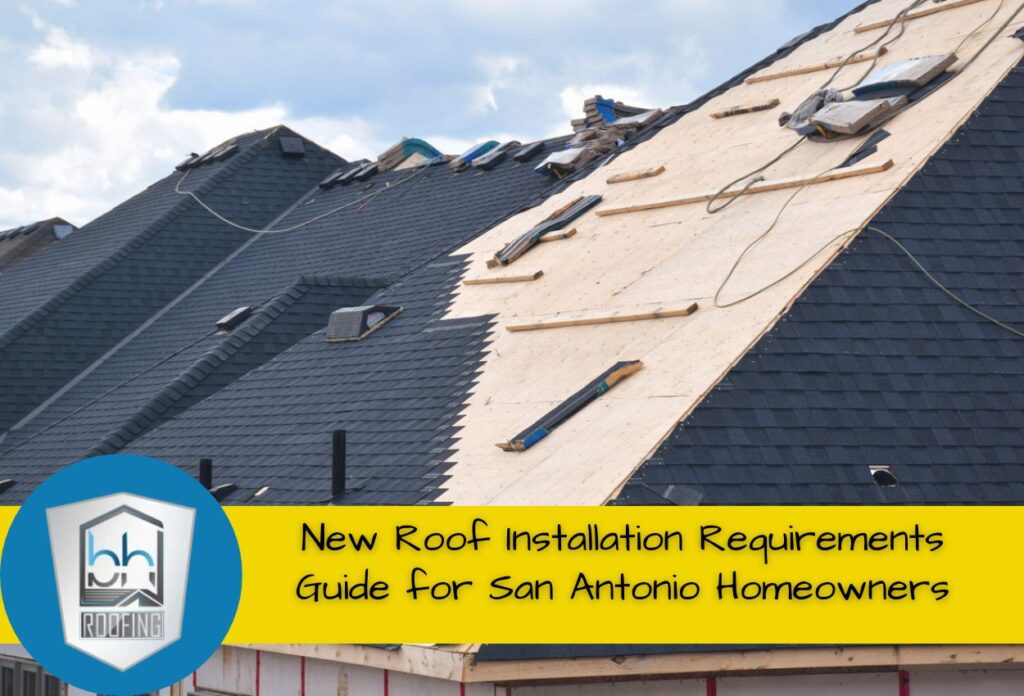
Usually three checkpoints. The first is after tear-off, before new material goes down, when the inspector checks the deck for damage and proper fastening. The second is after underlayment and flashing, before the shingles cover them. The third is the final, after the roof is complete, checking shingle placement, ventilation, and workmanship.
Common failures are predictable: incorrect fastener spacing, inadequate underlayment overlap, a missing drip edge, and sloppy flashing around chimneys, vents, and valleys. When an inspector flags something, the contractor fixes it and schedules a re-inspection before final approval. Keeping the site organized and the material labels visible keeps those checks moving. Our 27-point roof inspection uses the same rigor on every job, permit or not.
What paperwork should you keep after a new roof?
Keep the permit, the final inspection certificate, the contractor’s license and insurance, and the manufacturer warranty documents, all in one file. Add the material spec sheets and a few photos from during the install. This packet proves the roof was done to code with approved materials, which matters at resale and when filing a storm claim.
That documentation is also what a warranty provider and an insurance adjuster expect to see. A roof with a clean paper trail settles questions fast; one without it invites them. If storm damage ever comes up, we provide documentation and photos to support your claim, and the claim itself stays between you and your carrier.
The bottom line on new roof requirements
A compliant new roof in San Antonio means a permit, Class A and properly wind- and impact-rated materials, a code install with sound decking and a drip edge, and passed inspections, all documented. A licensed contractor carries most of that load, which is the strongest argument for hiring one over the cheapest crew that skips the permit.
The cleanest way to start is a documented assessment of your roof and a scope built to code. Book a free 27-point inspection and you’ll get photos, a written report, and a plan that clears every requirement. Bring any other quotes and we’ll make sure they include the permit and the ratings.
Schedule Your Free Inspection or call (210) 267-9029.