Do Roofs Need Soffits in San Antonio? Ventilation Guide for Hot Climates
TL;DR
Roofs don’t strictly require soffits, but every attic needs intake ventilation, and vented soffits are the standard way to provide it. Without working intake vents, Texas attics hit 130 to 150 degrees, cooking shingles from underneath and trapping the moisture that causes mold and rot. Soffit replacement runs $6 to $30 per linear foot, and many older homes only need blocked vents cleared, not new panels.
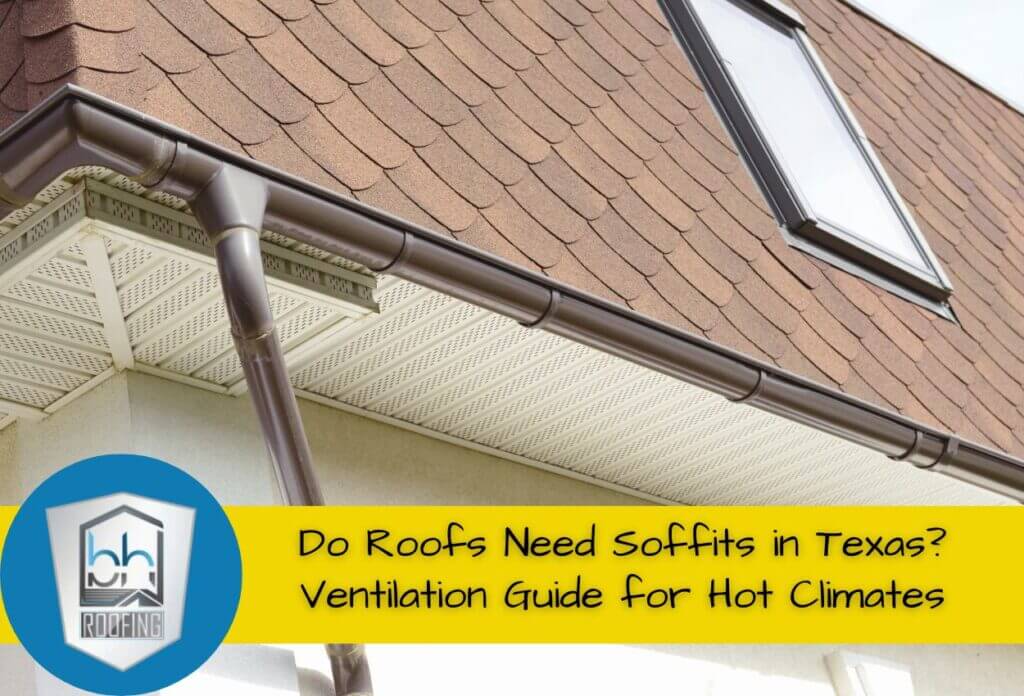
The soffit is the panel you see when you stand under your roof’s overhang and look straight up. Most homeowners never think about it until the upstairs won’t cool down, paint starts peeling off the eaves, or an inspector flags mold in the attic. All three problems trace back to the same question: is air actually moving through those panels?
Do roofs actually need soffits?
Not strictly. What every roof needs is intake ventilation, and vented soffits are the most effective and most common way to provide it. Building codes require attic ventilation, not soffits specifically, so homes without eave overhangs can meet code with alternatives like drip edge vents or fascia vents. But if your home has overhangs, vented soffits are almost always the right answer.
One correction worth making, because plenty of pages get it wrong: the residential code baseline for attic ventilation is 1 square foot of vent area per 150 square feet of attic, not 1 per 300. The 1:300 ratio is an exception you only qualify for when 40 to 50% of the vent area is exhaust near the ridge and the rest is intake down low. That balance is exactly what soffit vents plus a ridge vent deliver, which is why the combination is the standard on newer homes in the area.
What do soffits actually do on a hot-climate roof?
Soffit vents pull cooler outside air into the attic at the roof’s lowest point. As that air heats up, it rises and exits through ridge or gable vents, taking heat and moisture with it. Kill the intake and the whole system stalls: on older homes here, we routinely find soffit vents painted shut or buried under blown-in insulation, and those attics hit 130 to 150 degrees in summer.
That heat does real damage. It cooks shingles from underneath, ages the underlayment, and forces your AC to fight a furnace sitting on top of the house. The moisture side is quieter but worse: humid air that can’t escape condenses on rafters and decking, and the first visible signs are usually peeling paint, musty upstairs rooms, or rusted nail heads in the attic. By the time decking warps, you’re paying for structural repair, not vent cleaning.
How much do soffits cost to repair or replace?
Soffit replacement costs $6 to $30 per linear foot installed, with most homes averaging around $17. Material drives the range: wood is cheapest upfront but needs the most upkeep in this climate, vinyl is the value pick, and aluminum holds up best against the heat. Fascia boards, the vertical trim the gutters hang from, often get replaced at the same time.
| Scope | Typical cost |
|---|---|
| Clear blocked or painted-shut vents | $100 to $300 |
| Spot repair (labor) | $2 to $7 per linear foot |
| Wood soffit, installed | $5 to $17 per linear foot |
| Vinyl soffit, installed | $7 to $20 per linear foot |
| Aluminum soffit, installed | $9 to $30 per linear foot |
| Fascia board replacement | $5 to $12 per linear foot |
Here’s the part that saves people money: a lot of “bad soffit” calls don’t need new soffit. If the panels are sound but the vents are clogged with paint, dust, or insulation, restoring airflow is a fraction of replacement cost. That’s why we check soffits and attic airflow as part of our 27-point roof inspection before recommending anything.
What if your home has no soffits at all?
Some rooflines have little or no overhang, so there’s nowhere to hang a soffit panel. Those homes can still meet the intake requirement with drip edge vents installed at the roof’s edge, fascia vents cut into the trim board, or gable vents on opposite end walls for cross-flow. Solar attic fans and turbine vents can boost exhaust when intake is limited.
The one thing that doesn’t work is skipping intake entirely and relying on exhaust vents alone. An attic can’t push air out faster than it lets air in, so an exhaust-only setup pulls conditioned air out of the house or simply stops moving air. If your roof is being replaced anyway, that’s the cheapest moment to fix the ventilation design, and it’s a conversation worth having during any roof replacement quote.
How do you know your soffits are failing?
You can spot most soffit problems from the ground. Peeling or bubbling paint on the panels, visible sagging, dark stains, or daylight showing through gaps all mean water or heat is getting where it shouldn’t. From inside, compressed or discolored attic insulation and a musty smell upstairs point to a ventilation problem, not just a cosmetic one.
Two local additions to that list. First, check for wasp and hornet nests: soffit gaps are their favorite spot here, and a nest usually means there’s an opening big enough for water too. Second, after hail or high wind, look at the soffit and fascia line along with the shingles, since storm damage to eaves is commonly missed on quick estimates and it’s claimable when documented properly.
Get your soffits checked before summer does the checking
Soffits are the cheapest part of the roof system to fix and one of the most expensive to ignore. If your upstairs runs hot, your eave paint is peeling, or your home is more than 15 years old and nobody has ever looked at the attic airflow, it’s worth 30 minutes of an inspector’s time.
BH Roofing is a GAF Master Elite® contractor serving greater San Antonio, and every inspection covers soffits, fascia, and attic ventilation with photos and a written report. Schedule a free 27-point inspection or call (210) 267-9029, and you’ll know whether you need cleared vents, a repair, or nothing at all.