Warehouse Roofing Contractor in San Antonio: How to Choose
TL;DR
The right warehouse roofing contractor has real experience on large low-slope roofs, the single-ply systems warehouses use (TPO, PVC, and metal), manufacturer certification, confirmable insurance, and a phasing plan that keeps your operation running. Vet for commercial scale, not just a good residential reputation. Match the system to your budget and cooling savings, since a reflective membrane cuts cooling load on a big roof. Treat the downtime plan as part of the bid.
The right warehouse roofing contractor has three things a general roofer may not: real experience on large low-slope roofs, the single-ply systems warehouses use (TPO, PVC, and metal), and a plan to keep your operation running during the work. On a footprint that big, the wrong crew turns a re-roof into weeks of leaks and downtime. So you vet for commercial scale, not just a good residential reputation.
Here’s what to look for, which systems fit a warehouse, and how a good contractor keeps the job from shutting you down.
What should you look for in a warehouse roofing contractor?
Look for commercial single-ply experience, confirmable insurance, manufacturer certification, references on jobs your size, and a phasing plan that protects operations. A warehouse roof is measured in tens of thousands of square feet, so a contractor who mostly does houses is learning on your building. The five checks below sort the specialists from the generalists.
| What to check | Why it matters for a warehouse |
|---|---|
| Large low-slope experience | Big single-ply roofs need different crews and equipment than pitched homes |
| Manufacturer certification | Required for the strong warranties on TPO and PVC systems |
| Confirmable insurance | Big crews and heavy equipment raise the liability stakes |
| References at your scale | A 2,000 sq ft job doesn’t prove they can run a 40,000 sq ft one |
| Phasing and safety plan | Keeps your operation running and workers safe during the job |
The certification point matters twice: it proves the manufacturer vetted the contractor, and it’s what unlocks the long warranties commercial systems carry. Our commercial roofing team works these large-footprint jobs across the area.
What roofing systems work best on a warehouse?
Single-ply membranes lead, mainly TPO and PVC, because they cover big low-slope roofs affordably and reflect heat. Metal suits some warehouses for longevity, and modified bitumen still serves certain buildings. The choice comes down to your budget, the roof’s slope and traffic, and how much the reflectivity saves you in cooling.
Reflectivity is a bigger deal on a warehouse than most owners expect. A white reflective membrane can cut cooling load meaningfully on a large building, which is why the Environmental Protection Agency’s Energy Star roof products program highlights cool roofing. For the systems themselves, our TPO and PVC pages cover where each fits.
How is warehouse roofing different from other commercial roofs?
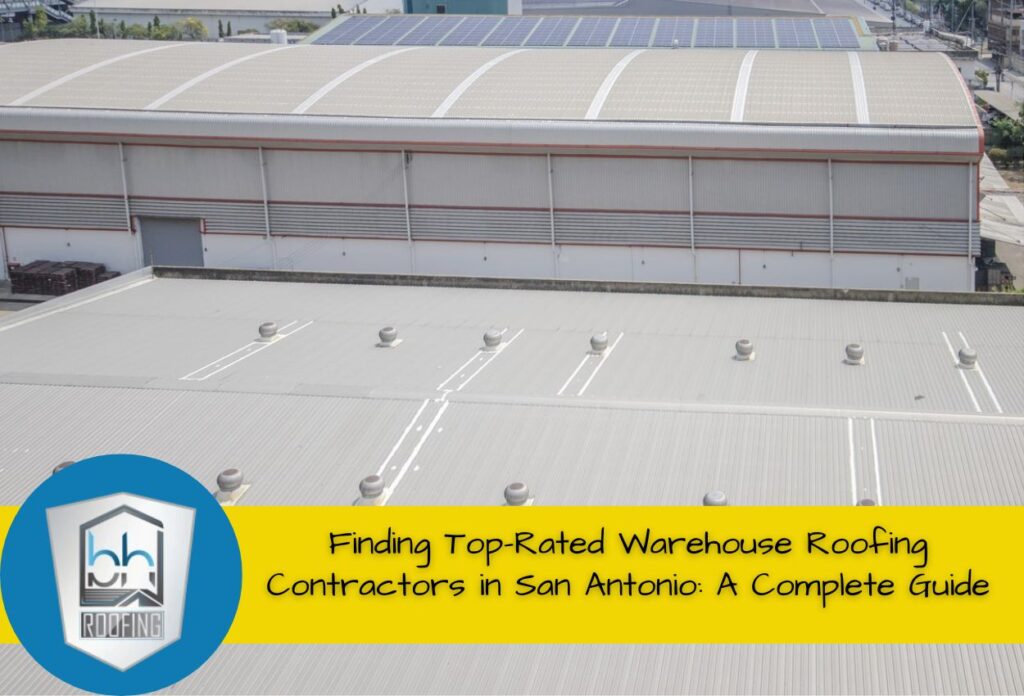
Scale changes everything: drainage, materials handling, and how a small problem spreads. A large low-slope roof has to move a lot of water to relatively few drains, so ponding and drainage design matter more than on a small building. The sheer area also means a minor defect can travel far before anyone notices, which raises the stakes on install quality.
Business continuity is the other difference. A leak over inventory or equipment isn’t just a repair, it’s a loss and possibly downtime. That’s why the contractor’s plan to work in sections and protect what’s below is part of the job, not an afterthought. As GAF’s commercial roofing overview notes, system choice and installation drive long-term performance on large buildings.
How do you minimize downtime during a warehouse re-roof?
By phasing the work and scheduling around your operation. A good contractor re-roofs in sections so part of the building stays protected while another is worked, tarps and dries-in each day’s area, and can often work off-hours or around your busiest periods. The goal is a dry building every night, not an open roof gambling on the forecast.
On warehouse jobs locally, we’ve found the difference between a smooth re-roof and a disruptive one is almost always the plan set before day one. Sequencing, weather contingencies, and protecting inventory get decided up front. A commercial roof maintenance program afterward keeps the new roof from sliding back toward another emergency.
The bottom line on choosing a warehouse roofer
Vet for commercial scale: large low-slope experience, manufacturer certification, confirmable insurance, references at your size, and a phasing plan that keeps you running. Match the system, usually TPO or PVC, to your budget and the cooling savings, and treat the downtime plan as part of the bid, not a detail.
The first step is a real assessment of your roof and operation. Book a commercial roof evaluation and you’ll get photos, a written report, a system recommendation, and a phasing plan built around your business. Bring any other bids and we’ll compare scope and warranty side by side.
Schedule a Commercial Roof Evaluation or call (210) 267-9029.