TL;DR
A roofing emergency means active water entry, a hole, structural sagging, or a tree on the house; everything else can wait for a next-day appointment at normal rates. Emergency tarping runs $1,200 to $2,500 for most homes and after-hours repairs $700 to $2,000, a 25 to 50% premium over scheduled work. Storm-caused emergency costs are usually reimbursable by insurance, so photograph everything and keep receipts. We answer day or night and respond to active leaks within 24 hours.
Most homeowners never see a roofing emergency coming. Storm damage, wind-blown debris, or a sudden leak shows up at the worst possible time: during heavy rain, right after a hailstorm, at 9pm on a Sunday. The next hour matters more than the next week, so here’s exactly what counts as an emergency, what to do first, and what the fast response actually costs.
What counts as a roofing emergency?
Active water coming in, a visible hole or missing section of roof, structural sagging, or a tree on the house. Those need same-day stabilization because every hour of water entry multiplies the damage below: insulation, drywall, flooring, wiring. A missing shingle with no water entry, a slow stain that’s been there for weeks, or storm damage that isn’t leaking yet are urgent, but they’re appointments, not emergencies.
The distinction matters because emergency response costs more. If water isn’t actively entering the house, you can usually book a next-day inspection, skip the after-hours premium, and put that money toward the permanent repair instead.
What should you do in the first hour?
Inside: move what’s under the leak, put a bucket down, and poke a small drain hole in any ceiling bulge so water doesn’t pool and collapse the drywall. Photograph everything with timestamps, including the water path, because that documentation feeds the insurance claim later. Outside: nothing. Don’t climb a wet roof, and don’t tarp it yourself; wet shingles after a storm are how homeowners end up in the ER over a repair a crew could stabilize in an hour.
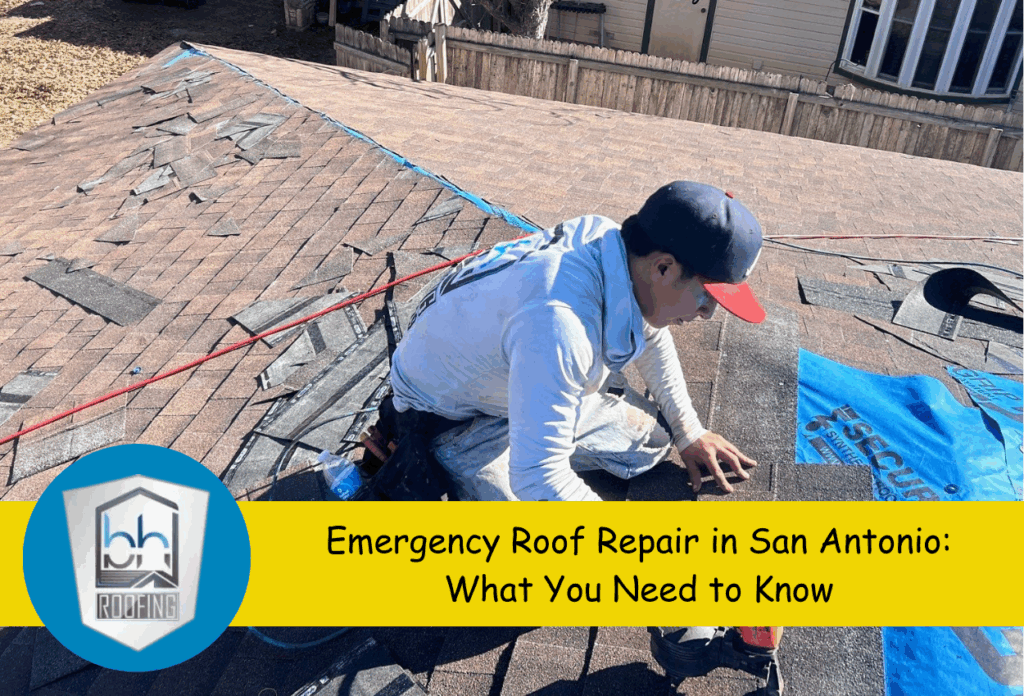
Then make the call. Our line is answered day and night, and we respond to active leaks within 24 hours with emergency tarping and dry-in, usually much faster during a storm event. Stabilization first, diagnosis and permanent roof repair once the weather clears and the roof is safe to walk.
How much does emergency roof repair cost?
Emergency tarping runs $1 to $2.80 per square foot of tarped area, with typical single-story jobs landing between $1,200 and $2,500. After-hours emergency repairs generally run $700 to $2,000, carrying a 25 to 50% premium over the same work scheduled in daylight.
| Emergency service | Typical cost |
|---|---|
| Emergency tarping, per sq ft of tarped area | $1 to $2.80 |
| Typical tarping job, single-story home | $1,200 to $2,500 |
| Emergency repair, after hours | $700 to $2,000 |
| After-hours premium vs scheduled work | add 25 to 50% |
| Same repair, scheduled after stabilization | $300 to $1,100 |
Two things keep that bill reasonable. First, tarping is cheaper than the damage it prevents: a $1,500 tarp that stops a week of water intrusion saves multiples of itself in drywall, flooring, and mold remediation. Second, if the damage came from a storm, reasonable emergency measures are typically reimbursable under your homeowners policy, so keep every receipt and photo.
Will insurance cover an emergency roof repair?
If a storm caused the damage, usually yes, including the tarping. Insurers expect homeowners to take reasonable steps to prevent further damage, and they reimburse those steps as part of the claim. What they don’t forgive is neglect: a leak that ran for a month before anyone acted becomes a coverage argument instead of a covered loss.
Document like the claim depends on it, because it does. Timestamped photos before and after tarping, the inspection report, and receipts for emergency work. We put that packet together for you as part of our insurance claim documentation, and our crews photograph everything they stabilize, so the adjuster sees the roof exactly as the storm left it.
What happens after the tarp goes on?
The tarp buys weeks, not seasons. Once the roof is dry and safe, we inspect the full system, document the damage, and quote the permanent repair, which at that point costs normal scheduled rates, typically $300 to $1,100 for a standard leak repair. If the damage is widespread, that’s when the repair-versus-replacement conversation happens, with photos and the insurance scope on the table.
The mistake to avoid is treating the tarp as the fix. Tarps degrade in UV within a couple of months, and a forgotten tarp becomes a second leak. If your roof has a blue rectangle on it from last season, that permanent repair is overdue.
Keep our number where you can find it
Roofing emergencies reward the prepared: know what counts, know what to do in the first hour, and know who answers the phone at 2am. We answer ours day or night, respond to active leaks within 24 hours, and put every emergency in writing with photos for your insurance claim.
BH Roofing is a GAF Master Elite® contractor serving greater San Antonio. Save this number: (210) 267-9029. For non-emergency damage, schedule a free inspection and skip the after-hours premium entirely.