
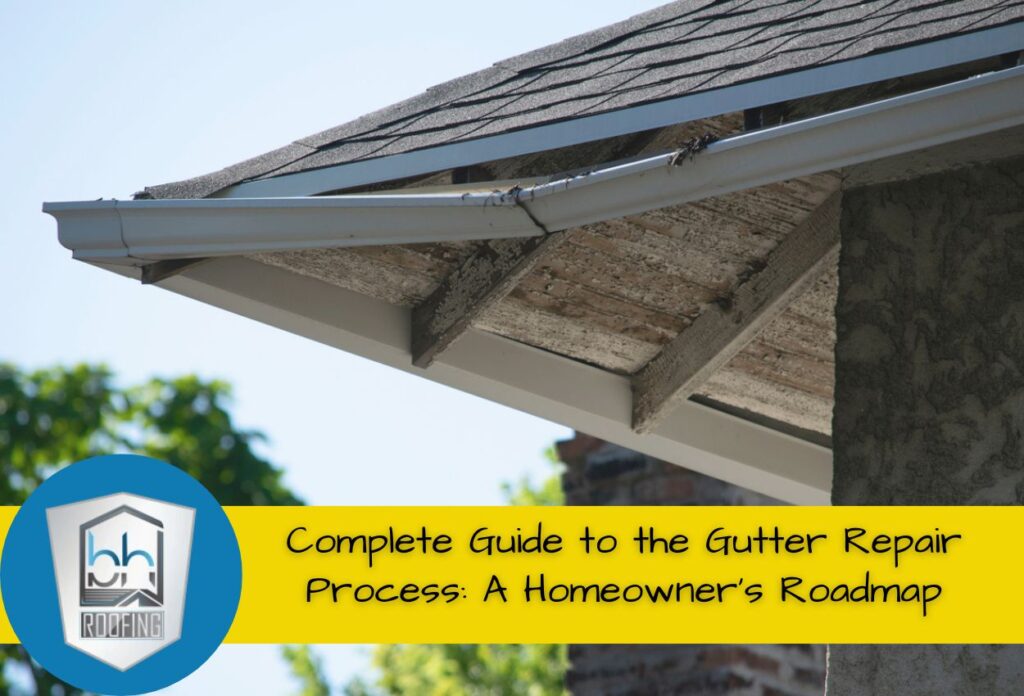
Most gutter repairs follow the same path: find the problem, clean the area, fix the specific issue, then test it with water. Small jobs like resealing a leaky seam, patching a hole, or tightening a loose hanger are genuinely DIY-friendly, and hiring one out runs about $225 at the going local rate. Sagging runs, seamless-gutter splicing, and anything off a tall ladder are better left to a pro, where the market generally lands between $195 and $625. What we’d charge depends on what we find, so the number comes after we’ve looked. The honest rule on repair versus replace: if the fix would cost more than about half of new gutters, or the system is 15-plus years old with widespread rust and sagging, replace it. At BH Roofing we repair and replace seamless gutters across San Antonio, and the assessment is free.
Gutters are easy to ignore right up until they overflow down your siding or drop water at the foundation. The good news is that gutter repair is one of the few roofing-adjacent jobs where a handy homeowner can fix the small stuff. The trick is knowing which problems are a tube of sealant on a Saturday and which ones need a pro, and when a repair stops making sense and you’re better off replacing the run.
This guide walks through the actual repair process, what the common fixes cost in San Antonio, and the honest line between a DIY job and a call to a contractor.
What does the gutter repair process actually involve?
Every gutter repair, big or small, follows the same four steps. First you find the real problem, which usually means getting up on a ladder and looking, not guessing from the ground. Then you clean and dry the spot, because no sealant or patch sticks to wet debris. Then you make the specific fix for that problem. Finally, and this is the step people skip, you run a hose through the system and watch, because that’s how you catch a bad slope or a clog you couldn’t see dry.
That last test matters more than it sounds. A lot of “leaks” are really water pooling because the gutter lost its pitch or a downspout is clogged, and sealing the spot does nothing. Finding the underlying cause is what makes the repair actually last through a San Antonio downpour.
How do you fix the most common gutter problems?
The fixes are straightforward once you know the move for each problem. Here’s the rundown, with whether it’s a reasonable DIY and what it runs if you hire it.
| Gutter problem | The fix | DIY or pro? | Typical local cost |
|---|---|---|---|
| Leak at a seam | Clean joint, remove old caulk, reseal | DIY-friendly | $1.50 to $6.50 per ft sealant ($100 to $225 hired) |
| Small hole or crack | Sealant, or a metal patch for bigger holes | DIY-friendly | $1 to $2 per ft for a patch |
| Clogged / overflowing | Clear debris, flush downspouts | DIY | Free to about $150 to have it cleaned |
| Sagging section | Replace or add hangers, reset the pitch | Pro for long runs | $75 to $300 |
| Pulled away from fascia | Rehang, screw through the back into the fascia | Often pro | Part of a $200 to $600 repair |
| Widespread rust or holes | Replace the run | Pro | $1,200 to $3,000 full replacement |
A few specs worth knowing if you do tackle it yourself. Gutters need about a quarter-inch of drop for every 10 feet of run so water heads toward the downspout. Seal holes smaller than a quarter-inch with gutter sealant and patch anything bigger with matching metal, then give it a full 24 hours to cure before you test it. For sagging, the real fix is usually new hangers spaced closer than the builder put them, which is the next thing worth understanding.
How much does gutter repair cost in San Antonio?
Across the local market, most gutter repairs land between $195 and $625, with the average around $385. The exact number depends on the problem and how much of the system it touches. Sealing a leaky seam or patching a hole is the cheap end. Rehanging a sagging run or fixing gutters that have pulled off the fascia sits in the middle. Replacing a rusted-out section pushes toward the top.
Broken down by job, the going rate on a leak repair is $100 to $225, sagging gutter repair runs $75 to $300, and sealant to waterproof seams costs roughly $1.50 to $6.50 per linear foot. Let a small leak sit and you’re not paying for a gutter anymore, you’re paying for fascia, soffit, or foundation work that runs into the thousands.
Worth being straight with you about one thing. The low end of that range usually buys a patch and nothing else. We check the fascia and the pitch before we touch the gutter, because a resealed seam on a rotted fascia board is a repair you’ll be paying for twice, and that’s the kind of thing that changes the number. The assessment is free, so you’ll know before you commit.
Can you repair gutters yourself, or should you call a pro?
You can handle more than you’d think, and some of it you shouldn’t. The genuinely DIY-friendly jobs are clearing debris, flushing downspouts, resealing a seam, patching a small hole, and tightening or replacing a loose hanger you can safely reach. Those are low-risk, low-cost, and a capable homeowner can knock them out in an afternoon.
What you should hand off is anything that involves a long sagging run, re-pitching a whole section, splicing a seamless gutter, or working off a tall or second-story ladder. Most gutter injuries are falls, and the things that actually matter, like getting the slope right and the hangers anchored into solid fascia, are easy to get wrong. A pro also spots the why behind the problem, like a rotted fascia board, that a quick patch would just cover up. If you’re not sure which camp your problem is in, a quick look from a gutter pro costs you nothing and tells you a lot.
When should you repair gutters versus replace them?
There’s a simple rule of thumb: if the repair would cost more than about half of what new gutters cost, replacing is the smarter money. A few hundred dollars to fix isolated damage on a 6-year-old system is a clear repair. Sinking $700 into a 16-year-old system that’s rusting in three places is throwing good money after bad.
Age and spread are the tells. Repair makes sense when the gutters are under about 10 years old and the damage is isolated, a leak here, a sag there. Lean toward replacement when the system is 15-plus years old, or when you see widespread rust, multiple sections pulling away from the fascia, water stains running down the siding, or pooling at the foundation. At that point the problems are a symptom of a system at the end of its life, and patching one spot just moves the leak down the line. Seamless aluminum gutters are the common replacement here, and they have far fewer joints to fail in the first place.
How do you keep repaired gutters from failing again?
A repair only lasts if the gutters stay clear, and in San Antonio that means a real schedule. Clean them in spring and fall, plus a quick check after any major storm, since one big oak can undo a whole season in an afternoon. While you’re up there, flush the system, confirm water actually reaches the downspouts, and re-check that the hangers are still tight.
A couple of upgrades cut the maintenance way down. Gutter guards keep leaves out while letting water through, which is worth it under overhanging trees. Downspout extensions carry water further from the foundation, and tighter hanger spacing, every 24 inches instead of the builder-standard 36, holds the gutters firm through our heavy downpours. If you want the full routine, we laid it out in our gutter maintenance guide. A little upkeep is far cheaper than the next repair.
Get your gutters fixed right by BH Roofing
Gutters are cheap to maintain and expensive to ignore, since the water they fail to move ends up in your fascia, your walls, or your foundation. When a repair is past the DIY line, or it’s time to weigh repair against replacement, it’s worth having a pro look.
BH Roofing repairs and replaces seamless gutters for homeowners across San Antonio, from resealing a leak to rehanging a sagging run to a full replacement. Our team checks the fascia and the slope, not just the gutter, so the fix actually holds, and we tell you straight whether you need a repair or a replacement.
Call BH Roofing at (210) 267-9029 for a free gutter assessment, and protect the rest of your home from the water your gutters are supposed to carry away.