TL;DR
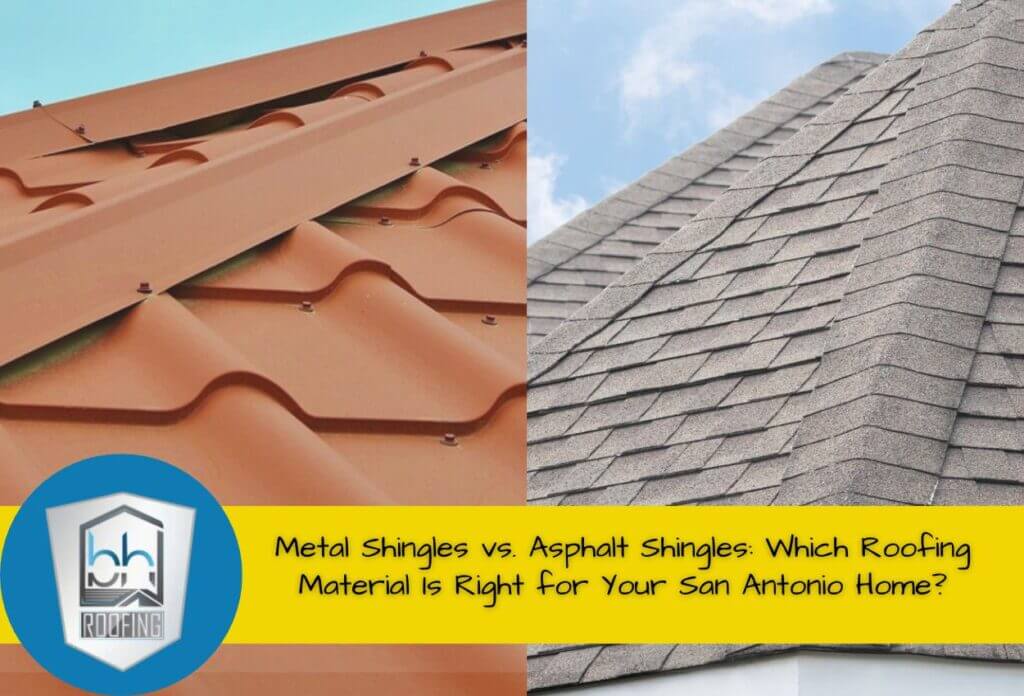
For a San Antonio home, metal shingles last 40 to 70 years and resist hail, wind, and heat better, while asphalt shingles cost less upfront and suit most neighborhoods. The best choice depends on your timeline: staying for decades favors metal, a tighter budget or near-term move favors architectural asphalt. Both perform well installed correctly, and install quality matters as much as the material. For pricing, see our asphalt vs metal cost guide.
For most San Antonio homeowners, metal wins on lifespan and toughness while asphalt wins on upfront cost and familiarity, so the “best” material comes down to how long you plan to own the house. Staying for decades favors metal; a tighter budget or a near-term move favors architectural asphalt shingles. Both protect the house well when they’re installed right.
This is a material decision, not just a price one. Below is how the two compare on the things that actually differ, lifespan, hail and wind, energy, looks, and upkeep, so you can match the roof to your home and your timeline. For the pure dollar comparison, see our asphalt vs metal roof cost breakdown.
Which lasts longer, metal or asphalt shingles?
Metal lasts far longer. A quality metal roof runs 40 to 70 years, while architectural asphalt shingles deliver about 15 to 20 years in our climate, a few years under national averages because heat and hail age asphalt fast. That gap is the single biggest reason homeowners staying put lean metal, since it’s often the last roof they’ll buy.
| Attribute | Metal | Asphalt shingles |
|---|---|---|
| Lifespan here | 40 to 70 years | 15 to 20 years |
| Hail (impact) | Class 4 available, dents stay cosmetic | Class 4 on premium lines; standard cracks |
| Wind rating | 120+ mph installed | 60 to 130 mph by tier |
| Summer heat | Reflects heat, runs cooler | Absorbs more heat |
| Maintenance | Occasional fastener checks | Inspect after storms; granule loss with age |
| Recyclable | Yes, and often recycled content | Rarely; adds landfill waste |
The trade-off is upfront cost, which is where asphalt keeps its edge. Metal’s longer life spreads its higher price over more years, so the two get closer on a per-year basis than the stickers suggest. This Old House’s metal vs asphalt breakdown lands on the same lifespan gap.
Which holds up better in San Antonio hail and wind?
Metal, in most storms. Class 4 metal shrugs off hail that cracks standard asphalt, and dents on metal are usually cosmetic rather than leaks. On the wind side, properly installed metal handles 120 mph or more, while asphalt ranges from about 60 mph on basic 3-tab to 130 on premium architectural. During our spring hail and the wind out front of a storm line, that margin matters.
On area roofs, we’ve found the difference shows up a few weeks after a storm, not during it. Bruised asphalt granules wash off and the leaks start later, while a dented metal panel keeps shedding water. Premium impact-rated asphalt narrows the gap, but it costs more and still ages faster in the heat. If you want the red flags to watch when a storm-chaser inflates that damage, our guide on how to tell if a roofer is lying covers them.
Which is more energy efficient in Texas heat?
Metal, clearly. Reflective metal sheds a large share of the sun’s heat instead of absorbing it, so attics and cooling bills run lower through our long summers. Asphalt absorbs and holds more heat, though “cool roof” shingle lines have narrowed the gap somewhat. In a place with 100-plus degree stretches, the reflective edge is a real monthly number, not a brochure line.
Ventilation matters as much as the surface, though. A well-vented attic under either material beats a poorly vented one under the “better” material. We check ventilation on every roof inspection because it quietly drives both comfort and how fast the roof ages.
How do they compare on looks and HOA rules?
Both offer plenty of options, so aesthetics rarely decide it alone. Modern metal comes in profiles and colors that mimic slate, shake, tile, and even shingles, and the finishes hold up in strong sun. Asphalt gives you the classic dimensional look most neighborhoods expect, in a wide palette, which suits many local homes and older architectural styles.
Check your HOA before you fall for a look. Many area associations have added approved metal options as durability won them over, but some still hold to asphalt-only rules. The metal roofs we install and our asphalt shingle options both cover a range of styles to fit those guidelines.
What about installation and maintenance?
Asphalt is simpler to install and nearly every roofer handles it, while metal takes specific training, so contractor selection matters more with metal. A poorly installed roof of either material fails early, but metal’s detail work leaves less room for error. Verify a metal installer’s track record and certifications before you sign.
Upkeep tilts toward metal over time. Asphalt needs a look after major storms and starts shedding granules, curling, and cracking as it ages, often needing real repairs every 5 to 10 years. Metal generally needs only periodic fastener checks and rarely a major repair in its first 25 years, a maintenance gap Bob Vila’s comparison notes as well. That lower upkeep is part of metal’s long-game value.
Which should you actually choose?
Answer three questions. How long will you own the home? Under about ten years, asphalt usually makes more sense; past fifteen, metal’s lifespan pays off. Does your area take regular hail? If so, impact-rated metal or premium asphalt earns its keep. And is this the last roof you want to buy? If yes, metal is built for it.
We quote both on the same inspection with the lifetime math side by side, and the honest answer changes house to house. What we won’t do is push metal on someone moving soon or bare-bones asphalt on someone who never wants to reroof again. For the dollar side of that decision, the asphalt vs metal cost guide has the numbers.
The bottom line on metal vs asphalt
Metal is the durability and longevity pick, asphalt is the affordability and familiarity pick, and San Antonio’s heat and hail widen metal’s performance edge while asphalt keeps the upfront advantage. Match the material to your timeline and your house, and weigh install quality as heavily as the material itself.
The clearest way to decide is to see both priced and explained for your actual roof. Book a free 27-point inspection and we’ll lay out metal and asphalt side by side, with photos, a written report, and the per-year math. Bring any other quotes and we’ll compare them with you.
Schedule Your Free Inspection or call (210) 267-9029.