TL;DR
A storm damage roof inspection looks for what the yard view misses: hail bruises and lost granules, wind-lifted or creased shingles, dinged flashing and vents, and dented gutters. Hail leaves round soft spots and bare patches; wind leaves missing, curled, or torn shingles. Check what you safely can from the ground and the attic, but get a pro up top after any real hail or high wind, because the damage that leaks later is the damage you can’t see from below.
After a San Antonio storm, the roof usually looks fine from the driveway and still took a beating. Hail bruises the shingles and knocks off the granules that protect them; wind lifts, creases, and tears them. Neither always shows from the ground, and both leak weeks later if nobody checks. Here’s what a real storm damage inspection looks at, how to tell hail damage from wind damage, and when it’s time to get a pro on the roof.
What does a storm damage roof inspection check?
The whole system, not just the obvious missing shingles. A good inspection covers the shingle surfaces for bruising and granule loss, the flashing and every penetration for dents and loose seals, the gutters for impact dents, and the attic and decking for leaks and soft spots. The goal is to catch the subtle damage that turns into a leak, not just the piece that blew off.
That’s the difference between a glance and an inspection. On storm calls, the damage that costs homeowners the most is the bruised shingle or cracked pipe-boot seal nobody saw for a month, not the shingle lying in the yard.
How can you tell hail damage from wind damage?
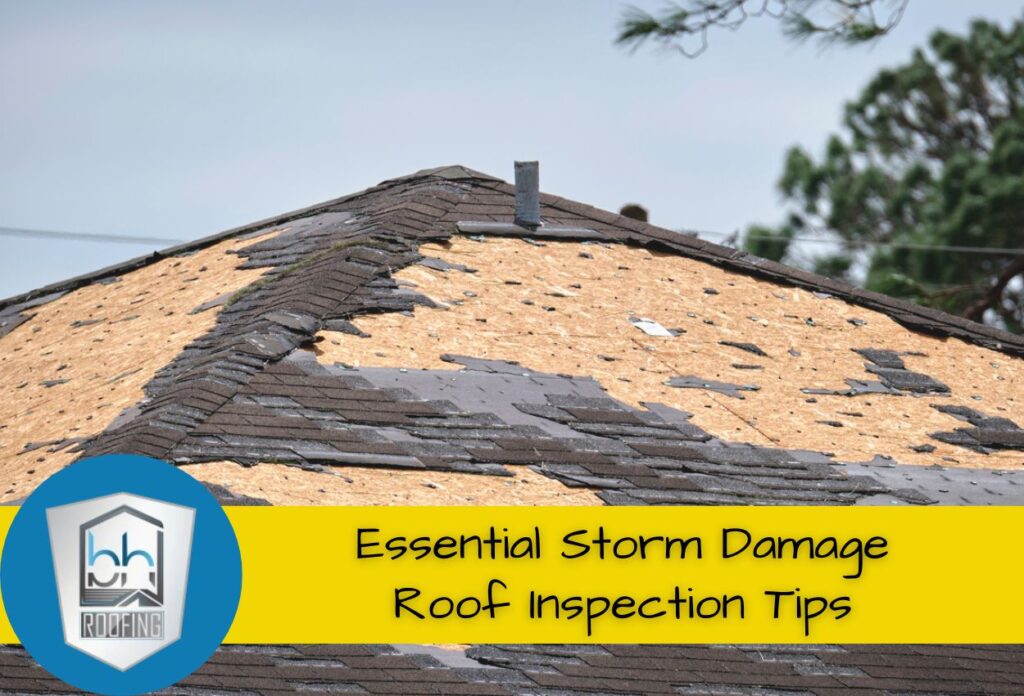
By the marks they leave. Hail makes round, soft bruises and knocks granules loose, leaving dark bare spots, and it dents gutters, vents, and metal. Wind does the opposite kind of damage: it lifts, creases, curls, and tears shingles, and scatters broken pieces across the yard. Hail tends to hit in a pattern across the slope facing the storm; wind damage clusters along edges and ridges.
| Sign | Points to hail | Points to wind |
|---|---|---|
| Shingle surface | Round bruises, soft dark spots, lost granules | Creases, curled or lifted corners |
| Missing pieces | Rare | Common, often torn or scattered |
| Metal and gutters | Dents and dings | Usually untouched |
| Where it shows | Pattern across the storm-facing slope | Along edges, ridges, and windward side |
| Other clues | Dents on the AC unit, siding, window frames | Debris and shingle pieces in the yard |
Two good outside references worth a look: Angi on what hail damage looks like and on wind damage to shingles.
Can you inspect storm damage yourself?
Some of it, from the ground and the attic, never from the roof. With binoculars, scan for missing, curled, or creased shingles and dinged flashing, and walk the yard for shingle pieces and washed-off granules. Check the gutters and the AC unit for hail dents. Inside, look in the attic in daylight for pinpoints of light or wet insulation, and at ceilings for fresh stains.
That tells you whether something happened. It won’t tell you how bad, because hail bruising and soft decking don’t read from below. Getting on a storm-hit roof safely is a real risk, which is why the up-top part belongs to a pro. If you’re still in the first hours after the storm, our guide on the first 24 hours after roof damage covers the safety and documentation steps first.
What does hail damage look like on different roofs?
It depends on the material. On asphalt shingles it’s granule loss and round bruises that feel soft, sometimes with the shiny mat showing through. On metal it’s dents. On tile it’s cracks and chips. And it’s never only the roof: check the gutters, downspouts, siding, window frames, and the outdoor AC unit, since dents there confirm the hail was big enough to do roof damage too.
Size and material decide how bad it is. Small hail on a newer impact-rated roof might do little; larger hail on an aging roof can total it. That’s the judgment call a professional inspection settles, and it’s the difference between a repair and a claim.
When do you need a professional inspection?
After any real hail or high wind, before you assume the roof’s fine. Definitely call one if you see interior stains, missing shingles, or dents on the gutters and AC, and before filing an insurance claim, since a documented inspection is what your claim stands on. Waiting is what turns a covered storm claim into an out-of-pocket repair once the leak shows up. Storm checks sit on top of your regular schedule, not instead of it, and how often to inspect a roof in San Antonio covers that rhythm.
To be clear on the insurance side: BH provides the detailed documentation and photos to support your claim. We’re not a public adjuster and don’t file or negotiate it, that part’s between you and your insurer. For the repair itself once damage is found, our hail damage roof repair guide covers what comes next.
Get a professional storm damage inspection
The takeaway is simple: after a storm, the damage that matters is usually the damage you can’t see from the ground. Check what you safely can, then get a pro on the roof to find the hail bruising, wind lift, and hidden leaks before they cost you. Catch it early and most storm damage is a repair, not a replacement.
BH Roofing is a GAF Master Elite roofer serving greater San Antonio, with 24-hour emergency response and a free 27-point roof inspection that documents every bit of storm damage with photos. Schedule your inspection or call (210) 267-9029.