TL;DR
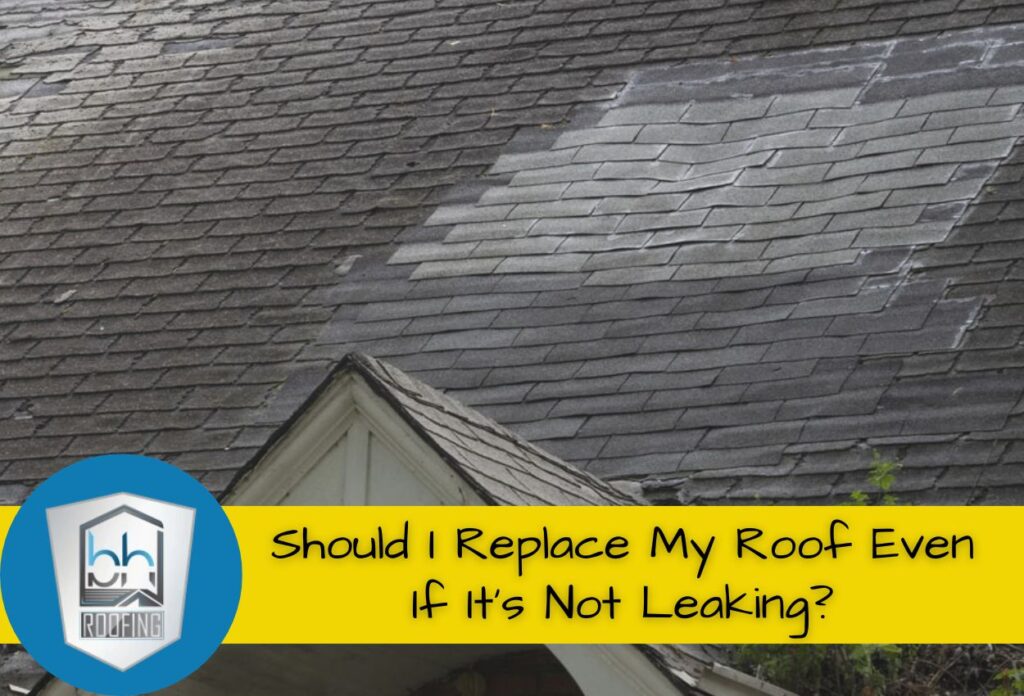
Sometimes replacing a roof that isn’t leaking is the smart move. A leak is the last sign a roof fails, not the first, so waiting for one can mean water has already reached the decking and insulation. Replace early when the roof is near the end of its life, widely worn, or you’re selling. Wait when it’s well within its lifespan with only minor issues. An inspection tells you how much life is actually left, since a roof can look fine from the ground while the shingles are spent.
Sometimes, yes, replacing a roof that isn’t leaking is the smart move. A leak is the last sign a roof fails, not the first, so waiting for one can mean waiting until water has already reached your decking and insulation. If your roof is near the end of its life, widely worn, or you’re about to sell, replacing before it leaks often costs less and saves the interior damage a leak brings.
Here’s when replacing a dry roof makes sense, when it’s fine to wait, and what waiting too long actually costs.
Should you replace a roof that isn’t leaking?
It depends on the roof’s condition and your plans, not just whether water is coming in. Replace early when the roof is near its age limit, showing widespread wear, or you need it done for a sale or peace of mind. Wait when the roof has real service life left and only minor issues. The table sorts the common cases.
| Replace even without a leak when… | It’s usually fine to wait when… |
|---|---|
| The roof is near or past its expected lifespan | The roof is well within its expected life |
| Widespread granule loss, curling, or brittleness | Only a few shingles need minor repair |
| You’re selling and buyers will flag it | An inspection confirms it’s sound |
| Repairs are stacking up toward replacement cost | Issues are isolated and cheap to fix |
The honest read comes from an inspection, since a roof can look fine from the driveway while the shingles are brittle and spent up close. Our roof inspection tells you how much life is actually left before you decide.
Why replace a roof before it leaks?
Because a leak is expensive in ways the roof itself isn’t. By the time water shows on your ceiling, it’s likely already soaked the underlayment and decking and may be growing mold, which adds repair costs on top of the roof. Replacing a spent roof proactively skips that damage and lets you schedule the work instead of scrambling after a storm.
Timing is the other advantage. A planned replacement lets you compare quotes, choose materials, and avoid the emergency pricing a planned replacement sidesteps, none of which you get when a leak forces your hand mid-storm. On area roofs, we’ve found the homeowners who replace on their own schedule almost always spend less than the ones who wait for the leak.
When is it fine to wait on a roof replacement?
When the roof is well within its lifespan and an inspection confirms it’s sound. A roof with years left and only a few minor issues doesn’t need replacing just because it’s aging, and a good contractor will tell you so. Targeted repairs and maintenance can carry a healthy roof a long way before replacement makes financial sense.
What you don’t want is to be talked into an early replacement you don’t need, which is why a second opinion matters if a roofer pushes replacement on a roof that isn’t leaking or badly worn. We quote the repair when a repair is honestly enough, and only recommend replacement when the roof’s condition supports it, not because it’s the bigger job.
What does waiting too long to replace a roof cost?
More than the roof. A failed roof left in place lets water into the decking, insulation, ceilings, and walls, turning a straightforward re-roof into a re-roof plus interior and mold repairs. It can also lead to a denied insurance claim, a point the Texas Department of Insurance makes about roof condition and claims, since insurers often won’t cover damage tied to a roof the owner let deteriorate past its life.
There’s a resale cost too. A visibly worn roof scares buyers and invites lower offers or repair demands, while a newer roof is a selling point. If your roof is near the end, replacing on your terms usually beats replacing under a leak, a deadline, or a buyer’s inspection. For how age factors in, our guide on signs of sun damage covers the wear to watch.
The bottom line on replacing a roof that isn’t leaking
A leak is the last warning, not the first, so a dry roof can still be due for replacement if it’s near the end of its life, widely worn, or headed to market. Replacing proactively skips the interior damage, avoids emergency pricing, and keeps the timing on your terms. But a sound roof with life left should be maintained, not replaced early.
The way to know which you have is an honest inspection. Book a free roof inspection and you’ll get photos, a written report, and a straight answer on how much life is left. If replacement makes sense we’ll say so; if it doesn’t, we’ll say that too.
Schedule Your Free Inspection or call (210) 267-9029.