Residential tile roofing · San Antonio, TX
Concrete & Clay Tile Roofing in San Antonio
Tile roof installation, targeted repairs, and complete replacement for San Antonio homes.
Clay and concrete tile roofing can complement Spanish, Mediterranean, and contemporary architecture. BH Roofing evaluates the condition of your roof, explains the differences between tile systems, and helps determine whether repairs, replacement, or a new installation makes sense.
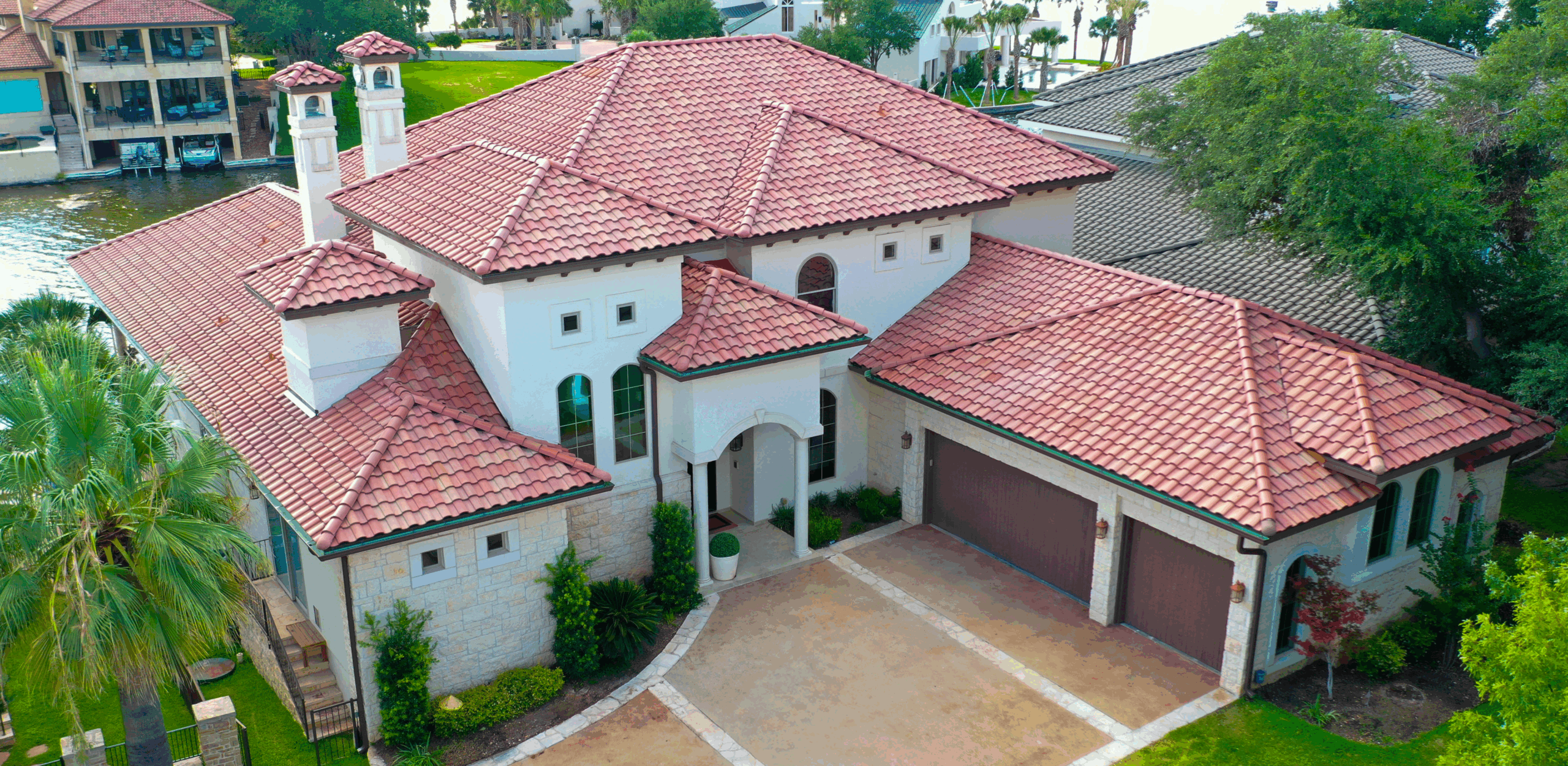
Tile Roofing Services for San Antonio Homes
A broken tile does not always mean you need a new roof. A professional evaluation should consider the tiles, underlayment, flashing, roof penetrations, and the structure supporting the roofing system.
01 · New construction
Concrete & Clay Tile Installation
Planning a tile roof starts with choosing a compatible system for the home’s slope, roof design, framing, ventilation, drainage, and local requirements. We discuss tile selection, flashing details, underlayment, and the installation scope before work begins.
02 · Existing roofs
Tile Roof Repair
Cracked, slipped, or missing tiles can expose underlying components. We evaluate whether the problem is isolated and whether underlayment, valleys, flashing, or previous repairs are contributing to leaks. Matching replacement tiles may depend on the existing profile and availability.
03 · Larger projects
Tile Roof Replacement
Where underlayment has deteriorated or roof problems are widespread, a larger reroofing project may be appropriate. We review removal, decking condition, tile selection, waterproofing details, and whether any existing tiles can reasonably be reused.
Unsure whether your tile roof needs repair or replacement? Start with an inspection and a clear explanation of the findings.
Clay Tile vs. Concrete Tile: What’s the Difference?
Both are established roofing materials, but their composition, appearance, weight, moisture characteristics, and installed system requirements differ. The right choice depends on the home and the specific products being considered.
Clay Roof Tiles
Clay tiles are fired ceramic products commonly associated with traditional Spanish and Mediterranean roof designs. They are available in a variety of profiles and finishes. Product selection, roof slope, fastening, and compatible accessories all matter.
Clay tiles can be long-lasting when properly specified and maintained, although tiles can fracture from impact or foot traffic.
Concrete Roof Tiles
Concrete tiles use a cement-based material and are manufactured in a wide range of shapes, textures, and colors. Different profiles can create traditional barrel-tile or flatter, contemporary appearances.
Concrete tile roofing also requires attention to structural loading, waterproofing underlayment, flashing, drainage, and manufacturer installation specifications.
Structural loading matters: Tile roofs are generally heavier than many asphalt shingle systems. If a home currently has shingles and the owner wants to switch to tile, the structure and applicable code requirements must be evaluated before promising that conversion is feasible.
How We Evaluate a Tile Roof
A useful inspection looks beyond the visible tile surface. Tiles shed the bulk of rainwater, while correctly detailed underlayment and flashing are crucial parts of the roof’s water-management system.
Visible Tile & Roof Condition
- Cracked, slipped, broken, or missing tiles
- Ridge and hip cap conditions
- Debris buildup in roof valleys
- Signs of previous patching or storm impact
Waterproofing & Detail Assessment
- Flashing around penetrations and adjoining walls
- Accessible underlayment and water intrusion clues
- Roof edges, transitions, and drainage
- Decking or structural concerns that need further evaluation
Seeing water stains or broken tiles? The cause should be diagnosed before replacing only the visible tile.
When Does Tile Repair Make Sense, and When Is Replacement Better?
Localized damage can sometimes be addressed without replacing the entire roofing system. A full replacement or more extensive underlayment work may make more sense where leaks repeatedly occur, underlying materials have deteriorated, or a large portion of the system is affected.
| Condition | What to evaluate |
|---|---|
| A few broken or displaced tiles | Tile availability, fastening, nearby damage, and whether the waterproofing underneath is intact |
| Leaks around vents or walls | Flashing and underlayment details, rather than assuming the tile itself is the source |
| Recurring leaks in several areas | Age and condition of underlying materials, drainage, prior repairs, and overall reroofing scope |
| Changing from shingles to tile | Structural capacity, compatible roof pitch, product weight, code requirements, and project budget |
For more general information about roofing issues, explore our residential roof repair services and roof replacement services.
Other Roofing Materials Worth Comparing
Not every home is a good candidate for tile. Roof slope, architecture, structure, maintenance expectations, budget, and warranty considerations should all inform the selection.
Asphalt Shingles
A widely used pitched-roof option with numerous architectural profiles, colors, and product tiers.
Metal Roofing
Standing-seam and other metal roof systems offer different visual styles and installation details.
Residential Flat & Low-Slope Roofs
Low-slope roof areas generally need systems designed for those drainage and waterproofing conditions, rather than conventional tile.
Concrete & Clay Tile Roofing FAQs
Can you replace only a few broken roof tiles?
Sometimes. If damage is limited and compatible tiles are available, targeted replacement may be possible. The underlying waterproofing and nearby roof components should also be evaluated.
Is clay tile better than concrete tile?
Neither material is automatically best for every roof. Appearance, product specifications, weight, installation requirements, budget, and roof design all matter.
Can I replace my asphalt shingles with tile?
A conversion may be feasible, but it requires an assessment of structural capacity and applicable construction requirements because tile systems can impose substantially different roof loads.
Does tile roofing prevent roof leaks?
No roofing system is leak-proof simply because of the surface material. Proper installation, waterproofing underlayment, flashing, drainage, and maintenance are important for tile roofs.
Do tile roofs require maintenance?
Yes. Periodic professional checks can identify broken tiles, blocked valleys, flashing problems, and signs of water intrusion. Avoid walking on tiles yourself, as they can break and roof access creates fall risks.
Need Tile Roof Installation, Repairs, or Replacement?
Talk with BH Roofing about concrete and clay tile roofing in San Antonio and the surrounding communities.