Roof Moisture and Fall Maintenance: Key Takeaways
Cool mornings and occasional fog are normal parts of San Antonio’s changing weather. While fog alone generally does not damage a properly maintained roof, existing roofing problems and moisture accumulating inside an attic can create conditions that require attention.
Key takeaways:
- San Antonio’s November climate: NOAA’s 1991–2020 normals show an average high of 72.2°F and low of 50.1°F.
- Fog does not automatically cause roof damage. A damp roof surface is not necessarily a leaking roof.
- Attic condensation is different from a roof leak. Warm, humid indoor air reaching cooler attic surfaces can sometimes cause moisture accumulation.
- Watch for warning signs: Water stains, damaged shingles, deteriorated flashing, damp insulation, and blocked drainage.
- Seasonal inspections matter. The National Roofing Contractors Association recommends inspecting residential roofing systems in spring and fall.
Homeowners who notice recurring moisture problems or visible roof damage should consider a professional inspection to identify the cause before deciding on repairs.
San Antonio weather can change quickly. A warm afternoon may be followed by a cool, foggy morning, leaving cars, lawns, and rooftops covered with moisture. For homeowners, that raises an important question: Can fog and cooler temperatures cause problems with a roof?
The short answer is that ordinary fog is generally not a threat to a properly installed and maintained roofing system. However, existing roof damage, water intrusion, and moisture accumulating inside an attic can create problems that should not be ignored.
Understanding the difference between surface moisture, condensation, and an actual roof leak can help San Antonio homeowners recognize warning signs before damage becomes more extensive.
San Antonio Fall Weather: What the Numbers Show
San Antonio’s fall weather creates noticeable differences between daytime and nighttime temperatures. Those changes are part of the reason homeowners may notice dew or moisture on outdoor surfaces during cooler mornings.
According to the National Oceanic and Atmospheric Administration’s 1991–2020 climate normals, November temperatures at San Antonio International Airport average:
November Temperatures in San Antonio
Source: NOAA National Centers for Environmental Information, San Antonio International Airport, 1991–2020 normals . These are historical monthly averages, not daily forecasts or measurements for November 2026.
These averages illustrate the region’s seasonal temperature changes. Actual daily conditions vary, and condensation depends on factors such as temperature, humidity, and the dew point.
The important distinction is that exterior moisture and moisture developing inside a roofing assembly do not necessarily have the same source.
Does Morning Fog Damage Your Roof?
Fog consists of tiny water droplets suspended in the air near the ground. These droplets can leave exposed surfaces damp, particularly when combined with dew or other moisture.
Roofing systems are designed to withstand ordinary weather exposure. Seeing moisture on shingles during a foggy morning does not automatically indicate damage or a leak.
However, a roof with missing shingles, damaged flashing, deteriorated seals, or drainage problems may already be vulnerable to water intrusion.
Important: Fog does not automatically cause roof leaks. If a ceiling or attic becomes wet, the source could be roof damage, condensation, plumbing, or another moisture problem. The cause should be identified before repairs are recommended.
Why Cooler Mornings Can Reveal Attic Condensation
Condensation occurs when moisture in the air encounters a surface cool enough for water vapor to condense. In some homes, warm, humid indoor air can escape through ceiling openings and enter an attic.
When that air reaches sufficiently cool roof decking or other attic surfaces, moisture may accumulate. Repeated or prolonged moisture problems can contribute to staining, damp insulation, deterioration of wood, or mold growth.
The U.S. Department of Energy’s Building America program identifies air leakage, indoor humidity, surface temperatures, and roof assembly design as important factors in controlling attic condensation.
The appropriate solution depends on the home’s design. Some houses use ventilated attics, while others have conditioned or unvented attic assemblies. Adding more ventilation is not automatically the correct solution for every moisture problem.
For additional information, see the Department of Energy’s guidance on condensation control in attics and roofs .
Five Roof and Attic Moisture Warning Signs
A homeowner does not need to climb onto a roof to recognize many common warning signs. Here are five conditions worth investigating.
1. Water Stains on Ceilings or Walls
Brown or yellow discoloration, peeling paint, or recurring damp spots may indicate a moisture problem. Roof leaks are one possible explanation, but plumbing leaks and condensation can produce similar symptoms.
Pay attention to whether the staining changes after rainfall or during particular weather conditions. That information may help a professional identify the source.
2. Missing, Cracked, or Displaced Shingles
Damaged roofing materials can create vulnerable areas where wind-driven rain may enter. From a safe location on the ground, look for obvious changes to the roof surface.
If you notice missing materials or visible storm damage, consider a professional assessment rather than attempting to climb onto the roof.
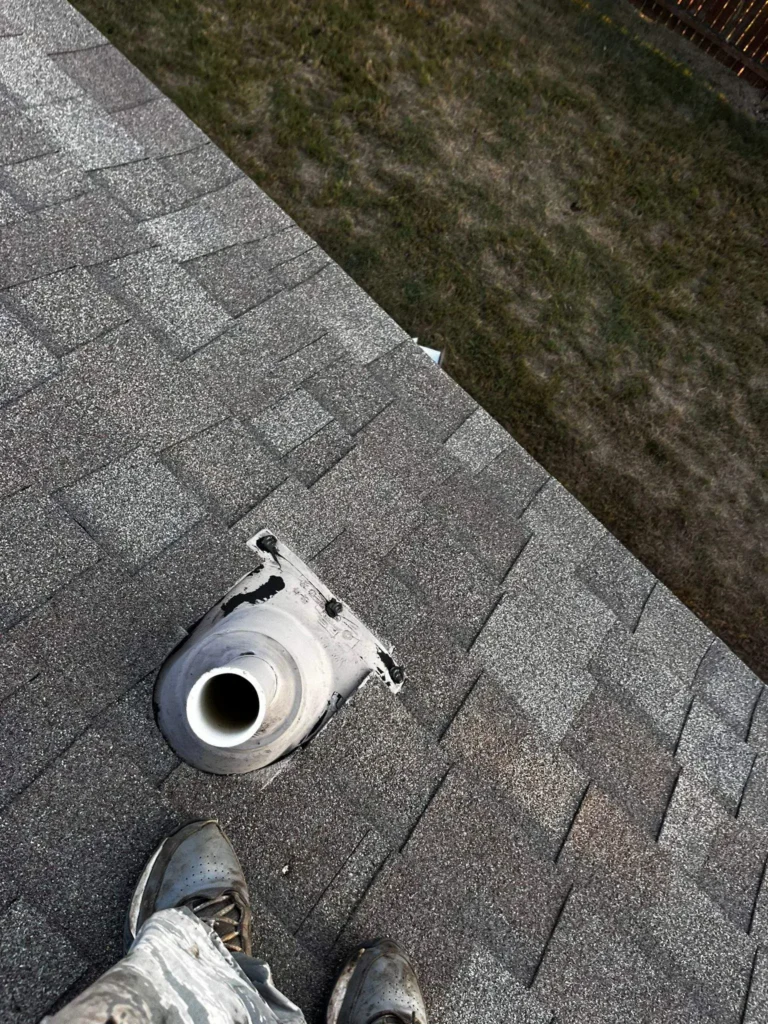
3. Damaged Flashing Around Roof Openings
Flashing helps direct water away from vulnerable transitions around chimneys, vents, skylights, and walls.
Damaged or improperly installed flashing can contribute to leaks, even when surrounding shingles appear to be in good condition.
4. Damp Insulation or Musty Attic Odors
Wet insulation, persistent musty odors, and visible staining on roof decking can indicate excess moisture.
These conditions deserve attention, but they should not automatically be attributed to a roof leak. An investigation may need to consider air leakage, condensation, HVAC equipment, and other moisture sources.
5. Clogged Gutters and Drainage Problems
Leaves, branches, and debris can obstruct gutters and roof valleys, preventing water from draining as intended.
Drainage problems can increase the risk of water collecting near roof edges, flashing, and other vulnerable areas. Keeping drainage paths clear is an important part of maintenance.
Fall Roof Maintenance Checklist for San Antonio
The National Roofing Contractors Association recommends checking residential roofing systems during the spring and fall. Routine attention can help identify conditions that require further evaluation.
For San Antonio homeowners, a practical fall maintenance checklist includes:
- Inspect from the ground: Look for missing, curling, or visibly damaged shingles.
- Check drainage: Look for debris collecting in gutters, downspouts, and roof valleys.
- Look indoors: Pay attention to new water stains, peeling paint, and unexplained dampness.
- Observe accessible attic areas: Watch for damp insulation, staining, or persistent musty odors without disturbing potentially hazardous materials.
- Review previous repairs: Areas with recurring leaks or past storm damage may deserve additional attention.
- Arrange professional assistance: Have suspicious conditions evaluated before they develop into larger problems.
Roof safety: Do not climb onto a roof to inspect or repair it yourself. Falls can cause serious injuries, and walking on roofing materials may also cause damage. Use a qualified professional for work that requires roof access.
For help evaluating damage, learn more about roof repair services in San Antonio .
When Should You Schedule a Professional Roof Inspection?
Not every foggy morning or damp roof surface calls for a professional inspection. However, new water stains, visibly damaged roofing materials, repeated leaks, or persistent attic moisture should not be ignored.
A roofing inspection can help identify visible problems with shingles, flashing, roof penetrations, and other roof components. Depending on the findings, additional evaluation of attic moisture, plumbing, or HVAC systems may be necessary.
Addressing an isolated problem may be more appropriate than replacing the entire roof. When damage is extensive, a professional can explain the condition of the roofing system and available repair or replacement options.
Explore BH Roofing SA’s residential roofing services or learn more about scheduling a roof inspection in San Antonio .
Protecting Your Roof Before Winter
San Antonio winters are generally milder than those in many northern states, but cooler temperatures do not eliminate the need for roof maintenance.
Understanding the signs of water intrusion and attic moisture can help homeowners make informed decisions about maintaining their roofing systems.
If you have noticed missing shingles, recurring water stains, or other signs of possible roof damage, BH Roofing SA serves homeowners in San Antonio and surrounding communities.