TL;DR
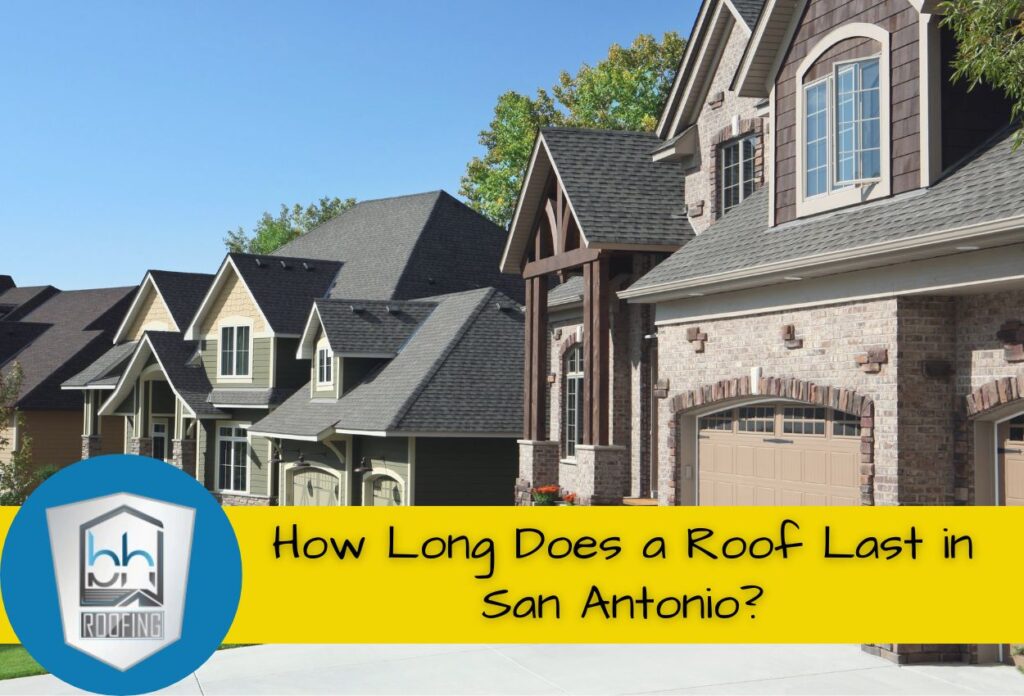
Asphalt shingle roofs last 15 to 20 years in San Antonio, about 5 years less than national averages, because heat and UV do the aging here. Metal runs 40 to 70 years, clay and concrete tile 50 or more, and flat membranes 15 to 25. The biggest variables aren’t the material: installation quality and attic ventilation can swing any roof’s life by a decade in either direction.
The honest answer to this question is a range, and the range depends on what’s on the roof, who installed it, and how the attic underneath breathes. What’s consistent is the direction: almost every material gives up years here compared to national averages, because our summers do the aging that winters do elsewhere. Here’s what to actually expect, material by material.
How long does each roofing material last here?
Asphalt shingles, the most common roof in the area, last 15 to 20 years locally against a 20 to 25 year national expectation. Metal runs 40 to 70 years. Clay and concrete tile last 50 or more. Flat and low-slope membranes on modern homes run 15 to 25 years depending on the material.
| Material | National expectation | Realistic local lifespan |
|---|---|---|
| 3-tab asphalt shingles | 15 to 20 years | 12 to 15 years |
| Architectural asphalt shingles | 20 to 30 years | 15 to 20 years |
| Metal (standing seam, metal shingles) | 40 to 70 years | 40 to 70 years |
| Clay or concrete tile | 50 to 100 years | 50+ years |
| Flat membrane (TPO, PVC, mod-bit) | 20 to 30 years | 15 to 25 years |
Notice which rows don’t shrink: metal and tile hold their numbers because UV and heat don’t break them down the way they break down asphalt. That gap is why we walk buyers through lifetime cost, not just install cost, when comparing asphalt shingles against metal roofs: asphalt is cheaper twice, metal is cheaper once.
Why do roofs age faster in this climate?
Because the sun works on them nearly year-round. 2025 tied for the second-hottest year on record here, with 162 days at 90 degrees or hotter, and a shingle surface in summer runs far hotter than the air around it. That heat cooks the oils out of asphalt, making shingles brittle, and the daily expand-contract cycle loosens seal strips and backs out nails a fraction at a time.
Then the weather adds insult: hail bruises shingles that heat already made brittle, and the occasional hard freeze cracks what summer weakened. On inspections we can usually guess a roof’s age within a few years just from granule loss and how the shingle corners feel, and the south- and west-facing slopes almost always read older than the rest of the roof. Same house, same shingles, more sun.
What shortens a roof’s life the most?
Not the weather. The two biggest variables are ones homeowners control. First, installation quality: a properly installed architectural shingle roof reaches its 15 to 20 years here, while a bad install can fail in 8 to 10, and we’ve replaced plenty of the second kind. Nailing pattern, flashing detail, and ventilation setup at install day decide more than the brand on the wrapper.
Second, attic ventilation. An attic that can’t breathe hits 130 to 150 degrees in summer and cooks the shingles from underneath while the sun cooks them from above. We regularly find soffit vents painted shut or buried under insulation on older homes, and those roofs consistently age ahead of their years. Fixing attic ventilation is the cheapest life-extension a roof can buy, and it’s checked on every 27-point inspection.
What are the signs a roof is near the end?
From the ground: shingle corners curling or cupping, bald dark patches where granules are gone, and granules collecting in gutters and at downspouts. Granule loss is the aging clock on an asphalt roof; once the protective surface sheds, UV works on bare asphalt and deterioration accelerates. Inside, water stains on ceilings and light visible in the attic mean the end already arrived somewhere.
Age itself is a signal worth acting on. If your shingle roof is past 15 years, get it inspected twice a year even if it looks fine from the driveway, both to catch failures early and to keep a dated record of its condition. That documentation also matters for insurance: many Texas policies pay depreciated actual cash value instead of replacement cost on older roofs, so proof of a well-maintained roof has real dollar value when a storm hits.
How do you get more years out of a roof?
Three habits, none expensive. Keep the attic ventilated so the roof isn’t aging from both sides. Keep gutters clear so water drains instead of backing up under shingle edges. And fix small problems the season they appear: a $300 flashing repair left alone becomes decking replacement, and a lifted shingle becomes a leak. Roofs rarely fail all at once; they fail at the details first.
An annual professional inspection ties it together, especially after hail season. It catches the small failures, documents condition for insurance, and tells you honestly where the roof sits in its life. When the answer eventually becomes “closer to the end than the middle,” you can plan a roof replacement on your schedule and budget instead of the storm’s.
Find out where your roof actually sits in its lifespan
Every roof here has a countdown running, and the useful thing isn’t the exact number, it’s knowing whether you’re at year 5 or year 15 of it. A documented inspection answers that in one visit, with photos, and costs nothing.
BH Roofing is a GAF Master Elite® contractor serving greater San Antonio. If your roof has years left, we’ll tell you that in writing; if it doesn’t, you’ll have the evidence and options in front of you. Schedule your free 27-point inspection or call (210) 267-9029.