TL;DR
Inspect your gutters at least twice a year in San Antonio, once in spring and once in fall, plus within a few days of any hail or high-wind storm. Homes under live oaks or pecans should check every three months, since our trees drop the heaviest debris in spring right as storm season starts. A professional cleaning runs about $120 to $235, and a gutter check is included free in our 27-point roof inspection.
The short answer is twice a year, spring and fall, plus a quick look after any big storm. That baseline holds for most San Antonio homes. But the number that actually matters for your house depends on how many trees hang over your roof and how old your gutters are, and getting it wrong is what turns a free afternoon of cleaning into a foundation or fascia repair. Here is how to set your own schedule, what a real inspection looks at, and what it costs to hand off to a pro.
How often should you inspect your gutters in San Antonio?
At a minimum, twice a year: once in spring after the trees finish dropping and once in fall before the cool-season rains. On top of that, check them within a few days of any storm that brought hail or strong wind. That is the floor, not the rule for every home. The more tree cover and the older the gutters, the more often you look.
| Your situation | How often to inspect | What’s driving it |
|---|---|---|
| Standard home, light tree cover | Twice a year, spring and fall | Baseline seasonal debris and normal wear |
| Heavy tree cover (live oaks, pecans) | Every 3 months | Constant leaf, catkin, and twig drop clogs the runs |
| After any hail or high-wind storm | Within a few days | Storms bend hangers, dent runs, and pack them with debris |
| Older or sectional gutters | 3 times a year, focus on the seams | Joints are the first place sectional gutters leak |
| Past overflow or foundation movement | Every 3 months | Overflow at the foundation does the most damage here |
If you fall into two rows at once, go with the more frequent one. A 40-year-old home under a pair of live oaks is a quarterly job, not a twice-a-year job.
Why do San Antonio gutters need more than the twice-a-year rule?
Because our debris and our weather do not follow the national calendar. Live oaks here drop their leaves in spring, not fall, so the heaviest gutter-clogging load lands from about March through May, which is exactly when hail and storm season ramps up. Clogged gutters during a hard, fast downpour overflow at the worst possible time.
Where that overflow lands is the local problem. San Antonio sits on expansive clay soil that swells when wet and shrinks when dry, and water dumping off a blocked gutter soaks the ground right against the slab. That repeated wet-dry cycle at the foundation is a known cause of slab movement in this area, so a $150 cleaning genuinely protects a much more expensive repair. The gutters are not really about the gutters. They are about keeping water away from the foundation and the fascia.
What does a gutter inspection actually check?
More than whether they are full of leaves. A proper check looks at the whole water path, and each item is a small problem that turns into a big one if it is missed.
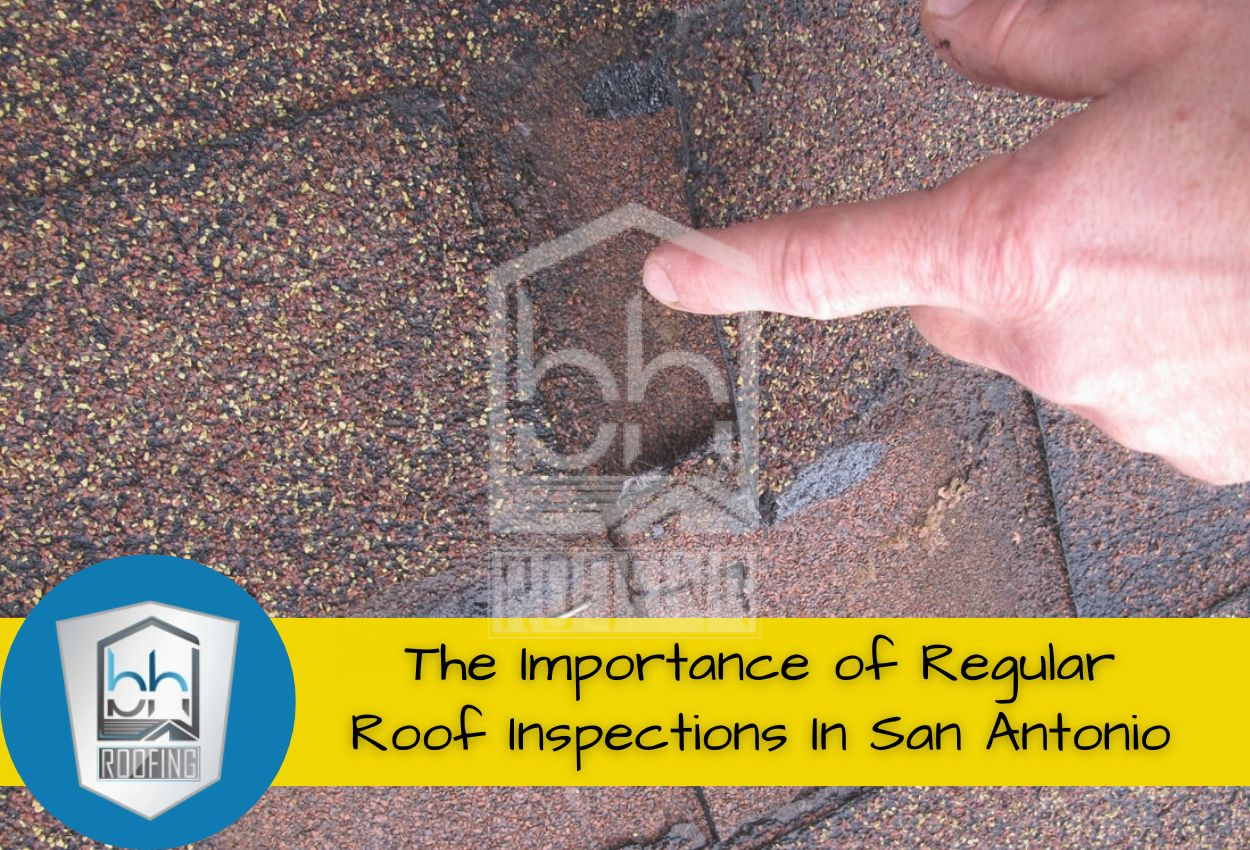
The debris itself tells a story. Leaves and twigs are expected, but a layer of shingle granules, the sandy grit that washes off asphalt shingles, is an aging signal from the roof above, which is why we check gutters as part of the full 27-point roof inspection. From there we look at the runs for sagging and the hangers holding them, since loose or too-widely-spaced hangers are what let a gutter pull away from the fascia. We check the slope, because a gutter that does not fall slightly toward the downspout holds standing water and gets heavy. We check the seams and end caps on sectional gutters, the first places they leak, and we look for rust, pinholes, and separation.
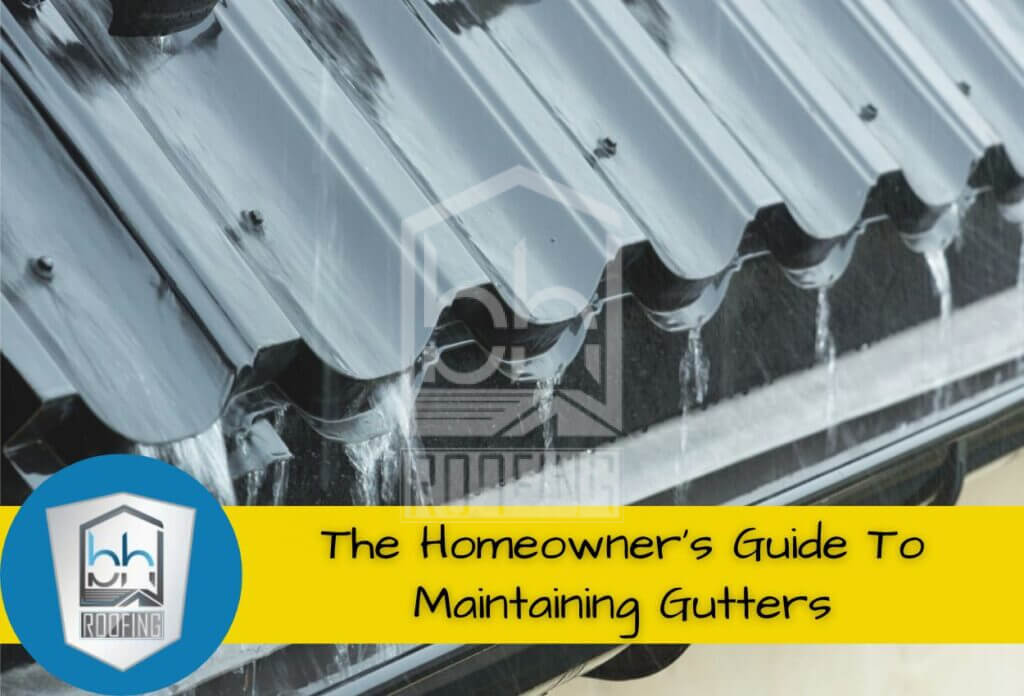
Then the water exits: downspouts need to be clear and, just as important, need extensions or splash blocks carrying water several feet away from the house, not dumping it at the corner of the slab. Finally we read the evidence, water stains and peeling paint on the fascia and soffit, mud splash on the siding, and eroded beds below, all of which mean the gutters have already overflowed and something needs fixing now.
How much does a gutter inspection or cleaning cost?
A standalone inspection is often free, especially bundled with a roof inspection, and ours is included in the free 27-point inspection. If you are hiring out the cleaning, most homeowners pay about $120 to $235, which works out to roughly $1 to $1.85 per linear foot for a single-story home and more for a two-story. Height is the biggest price driver, since two- and three-story runs need more setup and safety gear.
Doing it yourself costs only your time and a stable ladder. The honest math is that inspecting and cleaning is cheap either way, and skipping it is what gets expensive: fascia replacement, repeated foundation watering, and interior leaks all start at a clogged, overflowing gutter. If your gutters need actual repairs once you look, our gutter repair process guide walks through what those fixes involve.
When should you stop and call a pro?
Call someone when the fix is structural or the work is not safe. Leaks that come back after you have cleared and resealed a seam, gutters visibly pulling off the fascia, standing water that will not drain, or any sign of rotted fascia and soffit behind them are past a DIY cleaning and into repair. So is a second story you would need to reach from a tall ladder. For the routine cleaning and small tune-ups you can safely handle yourself, our gutter maintenance tips guide covers the tasks and cadence, and if bad installation is the root cause, our guide to common gutter installation mistakes shows what to look for.
Get your gutters checked with your roof inspection
The easiest way to stay on schedule is to check the gutters every time the roof gets looked at, since the two systems fail together and the granules in the gutter are a clue about the shingles above. That is why gutters are part of our standard inspection, not an add-on.
BH Roofing is a GAF Master Elite roofer serving greater San Antonio, and every visit starts with a free 27-point inspection that covers the roof, the fascia, and the gutter system as one water path. If everything is draining right, we will tell you that. If it is not, you will see exactly where and why. Schedule your free inspection or call (210) 267-9029.