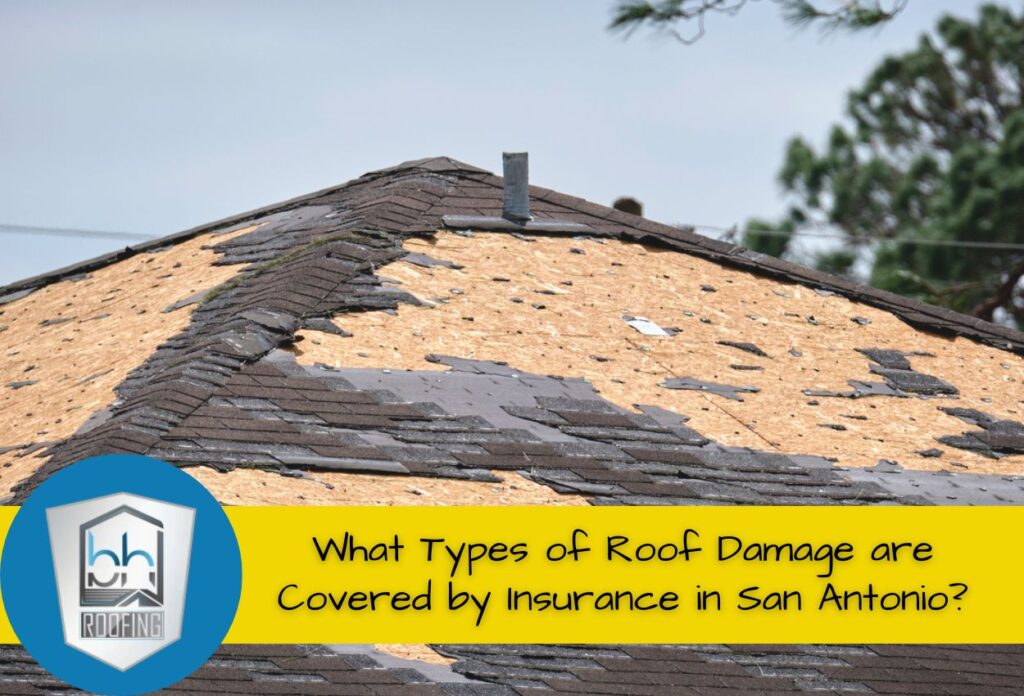
What Types of Roof Damage are Covered by Insurance in San Antonio?
TL;DR
Homeowners insurance covers sudden, accidental roof damage: hail, wind, fallen trees, fire, and the water intrusion that follows a storm breach. It doesn’t cover wear, age, or neglected maintenance. Two things decide most Texas claims: your separate 1 to 2% wind and hail deductible, and whether your policy pays replacement cost or depreciated actual cash value, which many policies switch to once a roof passes 10 to 15 years.
After every storm here, the same question comes up: will insurance actually pay for this? The honest answer is that coverage depends less on how bad the damage looks and more on what caused it, how old the roof is, and how well the claim is documented. Here’s how the coverage rules actually work in Texas, including the two policy details that decide most claims before the adjuster ever climbs a ladder.
What roof damage does insurance cover?
Homeowners insurance covers sudden, accidental damage from specific perils: hail strikes, wind, falling trees and debris, lightning and fire, and interior water damage that enters through a storm-created opening. What it never covers is gradual deterioration: worn-out shingles, aging sealant, long-term leaks, and anything an insurer can attribute to deferred maintenance.
| Damage cause | Typically covered? |
|---|---|
| Hail impacts (functional damage) | Yes |
| Wind-lifted, torn, or missing shingles | Yes |
| Fallen tree or wind-blown debris | Yes |
| Fire and lightning | Yes |
| Water intrusion through a storm breach | Yes |
| Gradual leaks and worn materials | No |
| Age, granule loss from normal wear | No |
| Damage from lack of maintenance | No |
| Flooding from ground level | No (separate flood policy) |
The line between “storm damage” and “wear” is where claims are won and lost, because on a 15-year-old roof the same crack can be argued either way. That’s why the Texas Department of Insurance recommends documenting your roof’s condition before storm season, and it’s why we photograph everything on our 27-point inspections: a dated record of a healthy roof is the strongest evidence that later damage was sudden.
What decides how much insurance actually pays?
Two policy details most homeowners haven’t read. First, the wind and hail deductible: most Texas policies apply a separate deductible of 1 to 2% of your dwelling coverage to wind and hail claims. On a $400,000 home, that’s $4,000 to $8,000 out of pocket before insurance pays anything.
Second, replacement cost versus actual cash value. An RCV policy pays what it costs to replace the roof. An ACV policy subtracts depreciation first, and many insurers switch roofs to ACV once they pass 10 to 15 years old. On an older roof, that difference can be the majority of the money: a $16,000 replacement might settle for a fraction of that after depreciation. If your roof is past 10 years, check which basis your policy uses now, not after the storm. Some carriers offer endorsements that keep RCV on well-maintained older roofs, usually in exchange for documented inspections.
How do adjusters decide whether roof damage qualifies?
They look for evidence tying damage to a specific event. For hail, adjusters mark off test squares, typically 10-by-10-foot sections on each slope, and count qualifying impacts; scattered dings may not clear the bar, while consistent strikes across squares do. For wind, they check damage patterns (lifted edges, directional lines of missing shingles) against weather records for your address on the claimed date.
This is exactly where having your contractor at the adjuster meeting matters. Fresh hail bruises and lifted seal strips are easy to miss from a ladder, and an adjuster working thirty claims that week won’t hunt for what isn’t pointed out. Our claim documentation records the roof before the meeting, captures every slope in photos, and puts the damage in writing so what’s actually there doesn’t get missed. If you’re unsure whether your damage reads as hail or wind, the patterns differ and the distinction can affect coverage.
How do you file a roof insurance claim in Texas?
Document first, file second. Take dated photos of the damage and the yard evidence (dented gutters, granules at downspouts, debris), get a professional inspection report, and stop active leaks with emergency tarping so the interior damage doesn’t grow while the claim processes. Keep the tarping receipts; reasonable emergency measures are typically reimbursable.
Then file promptly. Most policies set a claim window, often one year from the storm, and waiting weakens the storm-to-damage connection. Once filed, Texas law requires your insurer to acknowledge the claim within 15 days and issue a coverage decision within 15 business days of receiving what it requested. If the settlement comes back short, you can request a re-inspection or appeal with your contractor’s documentation, and disputed claims can go to appraisal under most policies.
When will insurance replace the whole roof instead of repairing it?
When damage is widespread enough that repair stops making sense. As a working rule, damage affecting more than about 25% of the roof pushes claims toward full replacement, and golf-ball hail across multiple slopes commonly totals a roof outright. Texas also follows a matching consideration: if your shingle line is discontinued and repairs can’t reasonably match, that can support replacement of a full slope or roof.
Age tips borderline calls. Marginal hail on a 5-year-old roof gets repaired; the same hits on an 18-year-old roof often total it, because brittle shingles take functional damage more easily and matching is harder. An honest assessment sometimes lands the other way too: if the damage is cosmetic and below your deductible, filing hurts you more than it helps, and we’ll tell you that in writing before you call your carrier.
Get the documentation before you need it
Every insurance question above gets easier with one habit: a documented inspection while the roof is healthy, and another within days of any real storm. The photos cost nothing, and they’re the difference between proving sudden damage and arguing about wear.
BH Roofing is a GAF Master Elite® contractor serving greater San Antonio, with photo-documented inspections and detailed claim documentation you can submit to your carrier. Schedule your free inspection or call (210) 267-9029.