TL;DR
Some roof damage is a call-now emergency and some can wait for a scheduled repair, and knowing the difference saves money and stress. Treat an active leak, water near wiring, daylight through the attic boards, a sagging deck, or a hole from a fallen limb as emergencies. A few missing or cracked shingles with no active leak can usually wait a few days for a proper repair, and minor granule loss is something to watch. When in doubt, a roof leaking inside is always urgent.
Not every bit of roof damage is a middle-of-the-night emergency, but some absolutely is, and the trick is knowing which is which. An active leak or a sagging deck needs a call right now. A couple of cracked shingles with no water coming in can usually wait for a scheduled repair. Here’s how to tell a true emergency from something that can wait a few days, so you’re not panicking over a minor issue or ignoring a serious one.
What roof damage needs immediate repair?
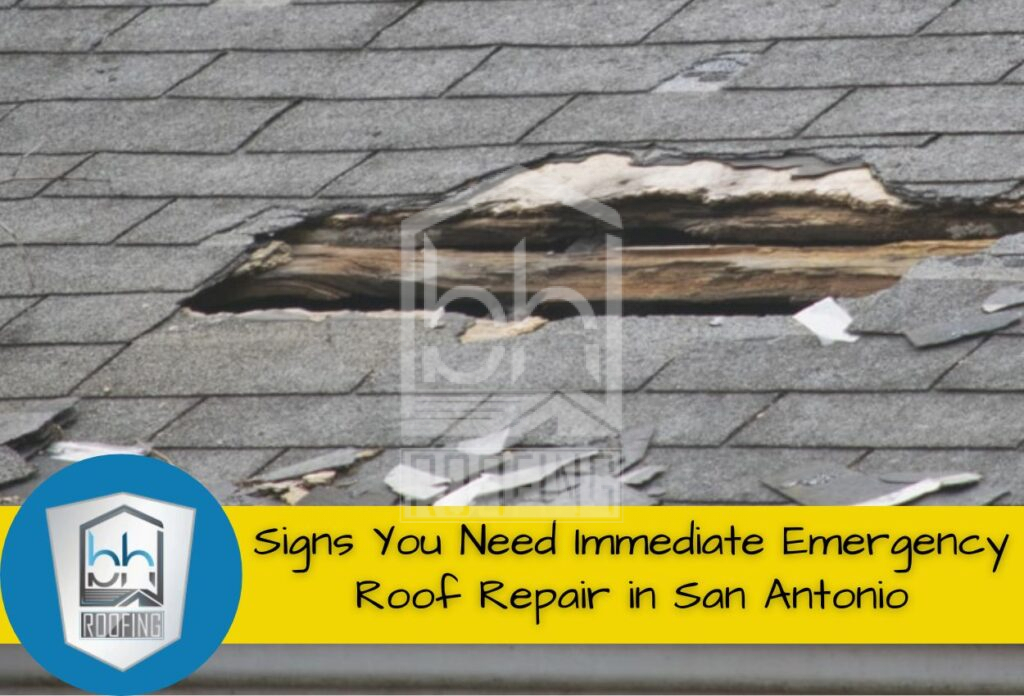
The kind that’s letting water in or threatening the structure. Call right away for an active leak or water in the attic or ceiling, water near light fixtures or wiring, daylight showing through the roof boards, a sagging or dipping roof deck, or a hole from a fallen tree limb. Those are past “monitor it,” because every hour of water inside means more damage to insulation, drywall, and framing.
The rule of thumb: if water is getting in, or the roof structure looks like it’s moving, it’s an emergency. Everything else is a matter of how soon, not whether to panic tonight. If you’re not sure what you’re looking at, GAF’s guide to identifying roof damage is a solid reference.
How urgent is it? A quick triage
Use this to sort what you’re seeing into call-now, repair-soon, or watch-it:
| Sign | How urgent | What to do |
|---|---|---|
| Active leak, water in the attic or ceiling | Emergency | Contain the water and call a roofer now |
| Water near light fixtures or wiring | Emergency (safety) | Kill power to the area, call a roofer and an electrician |
| A hole, or a tree limb through the roof | Emergency | Tarp it if safe, call for emergency repair |
| Sagging or dipping roof deck | Emergency (structural) | Stay clear underneath and get a pro out fast |
| Missing shingles with decking showing | Repair soon, before the next rain | Cover it and schedule the repair |
| A few cracked or lifted shingles, worn flashing or pipe boot | Repair soon | Schedule before the next storm |
| Minor granule loss, one lifted tab | Watch it | Note it and check at your next inspection |
Which signs are a true emergency?
Anything involving water inside or the structure. Water near electrical wiring is the most dangerous, since wet wiring can short or spark, so cut the power to that area and call both a roofer and an electrician. An active leak needs containment and emergency repair the same day. And a sagging or dipping section of roof is a structural warning, stay out from under it and get a professional out fast, because that’s the roof telling you it may not hold.
These aren’t wait-and-see situations. In San Antonio’s humidity, water that’s inside for even a day starts feeding mold and soaking into the decking, so the cost of waiting climbs quickly. Our emergency storm damage crew handles exactly these calls.
Which signs mean “repair soon” but not tonight?
Damage that’s a clear problem but isn’t letting water in yet. A few missing or cracked shingles, a lifted edge, worn flashing, or a cracked pipe boot all need fixing, just not at 2 a.m. The move is to cover any exposed spot to keep it dry and schedule a proper repair within a few days, before the next storm turns a small opening into an active leak.
The reason to not sit on it: these are the exact spots that become emergencies in the next hard rain. Getting them handled while the weather’s clear is far cheaper than an emergency call once water finds the gap. Our guide on the first 24 hours after roof damage covers how to protect the roof in the meantime.
What can you just monitor?
The minor, cosmetic wear. A little granule loss, a single lifted tab, or light surface aging on an otherwise sound roof is worth noting but not worth an emergency call. Keep an eye on it, and flag it at your next inspection so a pro can decide whether it’s early wear or the start of something.
The catch is that “minor” can be hard to judge from the ground, and small issues do turn into leaks over time. That’s what a regular roof inspection is for, it tells you which of the small stuff is fine to watch and which is quietly on its way to a leak.
Don’t wait on damage that’s letting water in
The short version: water inside or a moving structure is an emergency, exposed spots that aren’t leaking yet are a repair-soon, and minor wear is a watch-it. When you’re not sure, treat an active leak as urgent, because the cheapest version of any roof problem is the one caught before the water spreads.
BH Roofing serves greater San Antonio with 24-hour emergency response for exactly these situations, and every non-emergency visit starts with a free 27-point roof inspection to catch the repair-soon issues before they become emergencies. Call us at (210) 267-9029.