TL;DR
Asphalt shingles curl for five main reasons: poor attic ventilation baking them from below, bad installation, defective or aging shingles, and being laid over an old layer. A few curled edges can be sealed or swapped, but curling across the whole roof with granule loss usually means it’s near the end of its 15 to 25 year life. In San Antonio heat, check ventilation first.
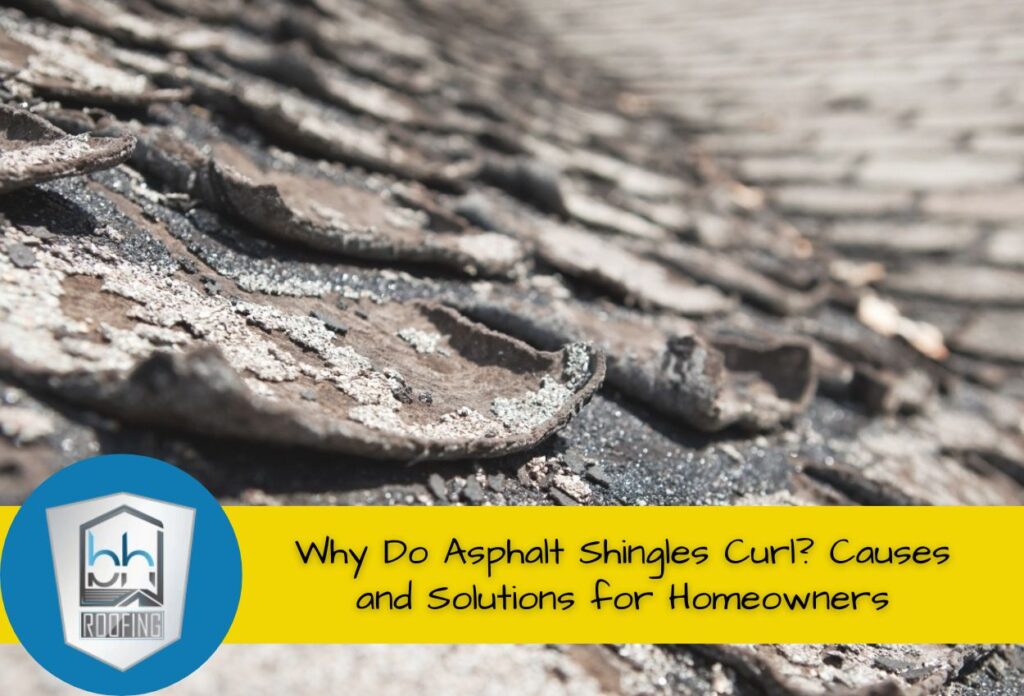
Curling is your roof telling you something, and what it means depends on how much of the roof is doing it. A few lifted edges over a garage are a repair. Curling spread across the field, especially with granules washing into the gutters, is usually a roof near the end of its life. The causes almost always trace back to heat and moisture from below, a bad install, or simple age. Here is what makes shingles curl, how to read the severity, and when it crosses from a fix into a replacement.
Why do asphalt shingles curl?
Five causes cover almost every case. Poor attic ventilation is the big one in San Antonio, where an under-vented attic hits 130 to 150 degrees and bakes the shingles from underneath until the edges lift. Age is next, since asphalt shingles dry out and curl as they reach the end of their life. Then come the install problems: shingles nailed wrong or with the adhesive strip out of line, and shingles laid straight over an old layer that telegraphs its texture through. Defective or low-grade shingles curl early on their own, and constant sun and moisture speed all of it up.
| Why shingles curl | What you see | What it usually means |
|---|---|---|
| Poor attic ventilation | Widespread curling, worst on the sunniest slopes | Heat baking shingles from below; fix the ventilation or it comes back |
| End of life (age) | Curling plus granule loss across the field | Roof is near replacement, 15 to 25 years in |
| Bad installation | Curling in patches soon after a new roof | Nailing or alignment defect; may be a warranty claim |
| Laid over an old layer | Uneven curling on a second-layer roof | The old surface telegraphs through; usually a redo |
| Defective shingles | Early curling on a young roof | Material defect; check the manufacturer warranty |
| Moisture and UV | Curled, cracked, brittle edges | Weathering; the seal fails and edges lift |
What is the difference between cupping and curling?
They get used interchangeably, but they point at slightly different things. Cupping is when the edges of a shingle turn up and the middle stays down, so the shingle looks like a shallow bowl. Clawing, the other form of curling, is the opposite: the middle rises while the edges stay pinned, so the shingle looks like it is pulling away in the center. Both mean the shingle has lost its flat seal to the ones around it, and both let wind get underneath. The cause and the fix are the same either way.
Does curling mean I need a new roof?
Not always, and that is the question worth getting right. Isolated curling, a few shingles on one slope or around a vent, is usually a repair. Curling that has spread across most of the roof is a different story, especially when it comes with granule loss, cracking, and shingles that crumble when you touch them. That combination means the shingles have given out, and patching them just delays the inevitable. Age is the tiebreaker: if the roof is past 15 to 20 years, curling across the field usually means it has reached the end of its expected lifespan and replacement is the honest call.
Can you fix curling shingles, or do they need replacing?
For a handful of shingles, you can. A roofer can seal a lifted edge with roofing cement or pull the nails and swap the shingle for a new one, which works when the rest of the roof is still sound. What does not work is sealing your way across a whole roof that is curling from age or bad ventilation, because you are treating the symptom while the cause keeps working. And if poor ventilation is behind it, the fix is not the shingles at all, it is adding intake and exhaust so the attic stops cooking. A roofer who only offers to glue edges down without looking in the attic is missing the actual problem.
How do you keep shingles from curling in the first place?
Ventilation, a clean install, and decent shingles. Balanced attic ventilation, enough intake at the soffits and exhaust up high, is what keeps San Antonio heat from baking the roof from below, and it is the single biggest thing under your control. Beyond that, a correct install with the right nailing and no laying over an old layer, plus shingles rated for this climate, prevents most early curling. A quick way to catch it before wind turns a curled edge into a leak is a routine 27-point roof inspection, which reads the attic and the shingle surface together.
Not sure if it’s a repair or a replacement?
That call is worth a real look, because getting it wrong costs money either way, replacing a roof that had years left, or patching one that needed to go. The tell is usually in the attic and in how much of the field is curling, which is exactly what an inspection sorts out.
BH Roofing is a GAF Master Elite roofer serving greater San Antonio, and every visit starts with a free 27-point inspection that checks ventilation, the decking, and the shingles as one system. If it’s a repair, we will tell you. If the roof has reached the end, you will see why. Schedule your free inspection or call (210) 267-9029.