TL;DR
Roof tarping runs $1 to $2.80 per square foot installed, about $1,200 to $2,500 for a typical job, plus 25 to 50 percent after hours. Tarp when the next rain would reach open decking and repairs can’t happen first. Plan around a 60-to-90-day tarp lifespan, photograph damage before covering it, and keep receipts: insurers usually reimburse tarping as mitigation. BH installs anchored tarps within 24 hours.
The storm’s gone, there’s a limb in the yard, and you can see felt paper where shingles used to be. Now you’re weighing a question with a clock on it: get a tarp up, or gamble that the repair happens before the next front. Around here, that gamble usually loses. This guide covers what tarping costs, when it’s worth it, how long a tarp really lasts, and what insurance expects from you in the meantime.
Do you actually need a tarp after a storm?
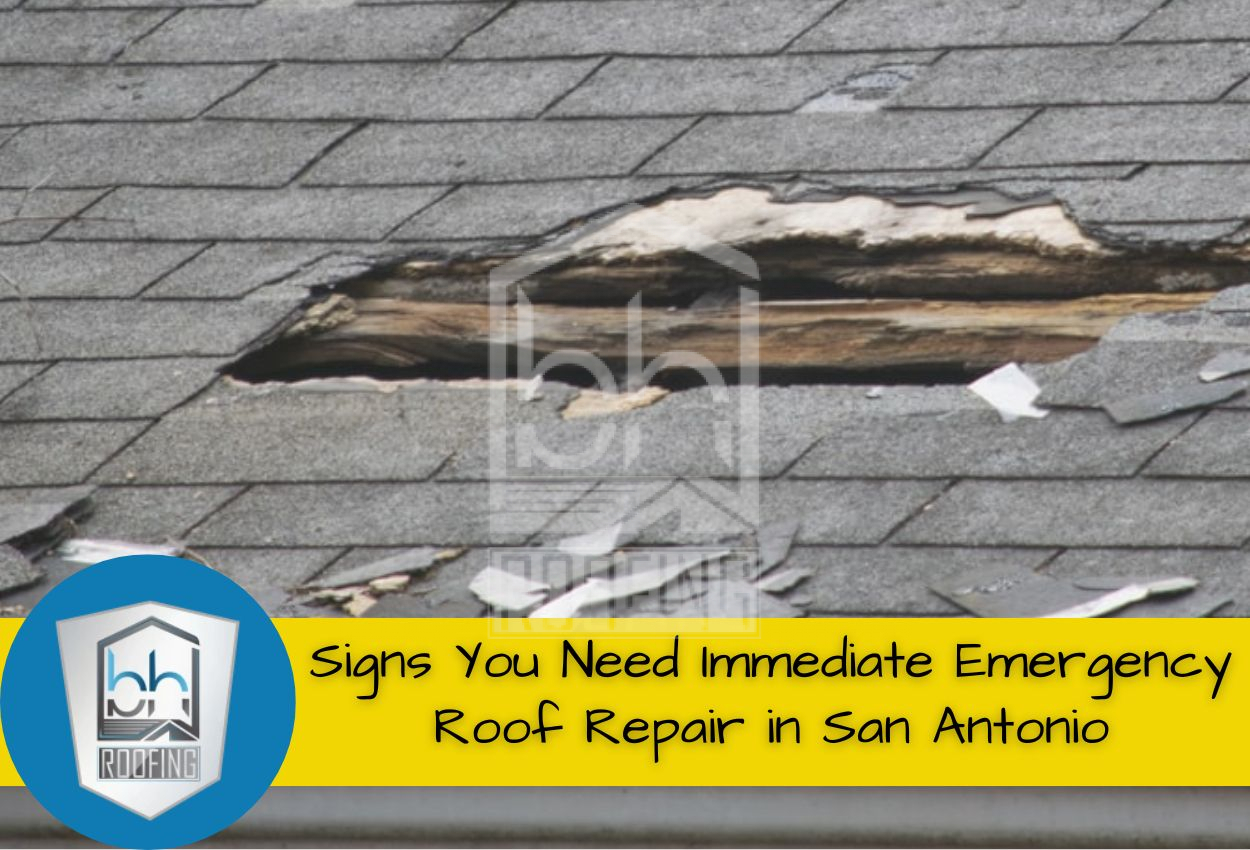
You need a tarp when the roof is opened up and repairs can’t happen before the next rain: shingles stripped down to felt or bare decking, punctures from limbs or hail, lifted flashing, or water already showing inside. If the damage is cosmetic, or a crew can fix it this week, skip the tarp and put that money into the repair itself.
The part homeowners underestimate is the second storm. In our experience, it’s rarely the storm that tears the roof open that floods the living room. It’s the rain two weeks later, while everyone’s still waiting on estimates. A tarp exists to take that second hit. After a big hail night, crews across the area book up fast, so temporary protection is what keeps a repair-sized problem from becoming a full emergency.
Before anything goes on the roof, photograph the damage from the ground and the attic if you can reach it safely. Once a tarp covers the evidence, those photos are what your adjuster works from.
How much does roof tarping cost?
Professional tarping runs $1 to $2.80 per square foot installed, and most whole jobs land between $1,200 and $2,500. Call after hours during an active storm and expect a 25 to 50 percent premium on top. That buys materials, safe access, and an anchoring job that holds in wind.
| Line item | Typical number |
|---|---|
| Tarp installation, per square foot | $1 to $2.80 |
| Typical whole-job range | $1,200 to $2,500 |
| After-hours or peak-storm premium | Add 25 to 50 percent |
| Reliable tarp lifespan in Texas sun | 60 to 90 days |
| The repair the tarp is buying time for | $150 to $800 common, $1,147 average |
Why the wide range? Pitch, height, and how much of the roof needs cover. A steep two-story roof with a big damage field costs more to tarp safely than a low garage slope. Wet or broken decking adds work too, since the crew has to anchor around it rather than through it.
How long will a tarp actually protect your roof?
Plan on 60 to 90 days of reliable protection, and less in high summer. A tarp is a countdown timer, not a repair. UV and heat turn standard poly tarps brittle, and our sun is not gentle: 2025 set a local record with 162 days at 90 degrees or hotter. Tarps that go up during spring hail season start failing by mid-summer if the repair stalls.
So schedule the permanent fix the same day the tarp goes on, not after the adjuster visits. Once a brittle tarp splits, water reaches decking that’s been trapped under plastic for weeks, and the EPA notes mold can start on wet materials within 24 to 48 hours.
Should you tarp the roof yourself?
Only in one narrow case: a small damage area on a dry, low-slope, single-story roof you can work on without stretching. Everything else belongs to a crew with fall protection. Wet shingles are slick, storm-damaged decking can give way underfoot, and the ER visit costs more than any tarp job.
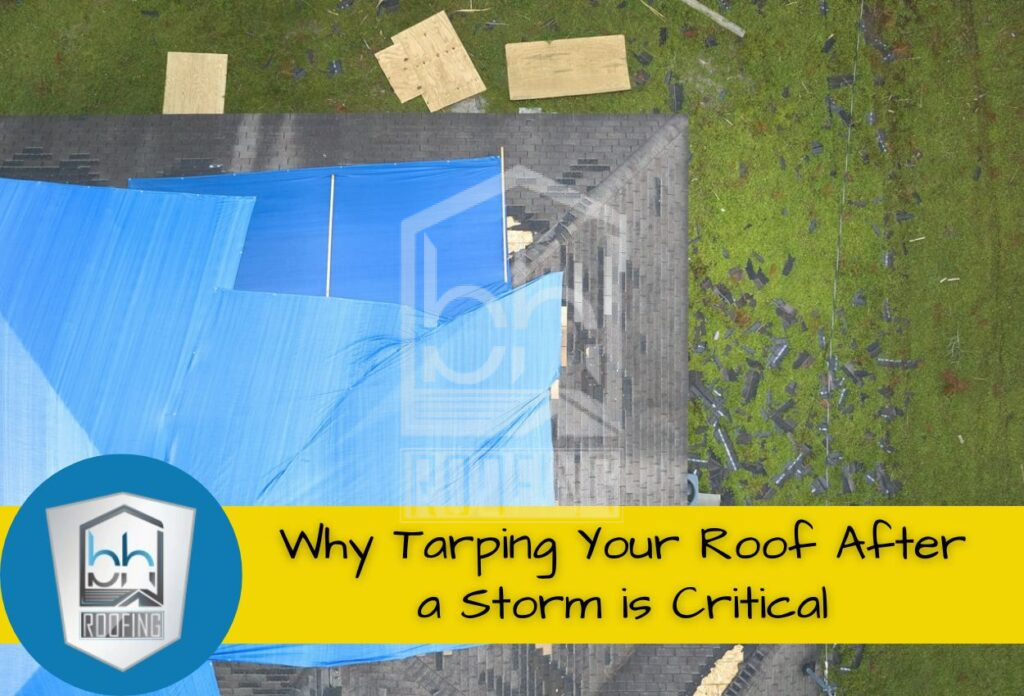
If you do qualify for the DIY case, do it right. Run the tarp over the ridge so water can’t get behind the top edge, extend it well past the damage on every side, and anchor it with furring strips screwed through the tarp into sound decking. Sandbags and bungees are how tarps end up in the neighbor’s yard. When in doubt, our roof tarping crew handles it start to finish.
Will insurance pay for tarping?
Usually, yes. Standard policies require you to prevent further damage after a storm, which insurers call mitigation, and reasonable tarping costs are typically reimbursable as part of the claim. Keep the receipt, keep your before-and-after photos, and don’t wait for the adjuster to show up before protecting the house. The Texas Department of Insurance gives insurers 15 days just to acknowledge your claim, and rain won’t wait that long.
One math check before you file: most Texas wind and hail deductibles run 1 to 2 percent of your dwelling coverage. If the tarp plus the repair lands under that number, pay cash and keep the claim off your record. We walk homeowners through that call as part of the insurance claim process, and if a claim isn’t worth filing, we’ll say so in writing.
Get covered before the next front rolls in
A tarp is cheap compared to what it prevents, but only if it goes up fast and comes down on schedule. BH Roofing responds to active leaks within 24 hours, installs anchored tarps that survive wind, and scopes the permanent repair with a free 27-point inspection, photos and written report included. Request emergency tarping, serving greater San Antonio.